10 Cute Bedroom Decor DIY Organization Ideas
Creating a bedroom that feels organized, comfortable, and visually appealing does not require expensive renovations or professional design services. Simple DIY organization projects can transform a cluttered room into a functional and attractive personal space. Many Pinterest ideas focus on combining storage solutions with decorative elements, allowing homeowners, renters, students, and families to maximize space while enhancing the overall appearance of the room. Cute bedroom decor DIY organization ideas are especially popular because they provide practical solutions that also contribute to a cohesive aesthetic. These projects often use affordable materials, beginner friendly techniques, and creative approaches that fit a variety of room sizes and styles. Whether the goal is to improve storage, display personal items, reduce clutter, or create a more relaxing environment, DIY projects offer flexible options for customization. This article explores ten detailed bedroom organization and decoration ideas that combine functionality with style. Readers will learn how to plan projects, choose suitable materials, create attractive storage solutions, and maintain an organized bedroom. Each idea includes practical instructions and creative inspiration to help achieve a tidy and visually pleasing space that reflects modern design principles while remaining accessible and budget conscious.
Why This Idea Is Trending or Useful
Bedroom organization has become a major focus within Pinterest inspiration because many people seek practical ways to improve their living environments without significant expense. Modern lifestyles often require multifunctional rooms that serve as sleeping areas, study spaces, workstations, and relaxation zones. As a result, creative ideas that combine storage and decoration continue to gain popularity. DIY organization projects offer an effective solution because they allow individuals to customize storage systems according to their specific needs while expressing personal style. Pinterest ideas frequently highlight projects that balance aesthetics with usability, making organization feel less like a chore and more like a creative project. Another reason these trending ideas attract attention is their accessibility. Most projects require basic materials, simple tools, and minimal experience. This makes them suitable for beginners interested in home decor and organization. The rise of minimalist style and modern design has also increased demand for attractive storage methods that reduce visible clutter. DIY projects support these goals by encouraging thoughtful planning and efficient use of available space. They also provide opportunities to repurpose existing items, reducing costs while creating unique decorative features. The combination of practicality, affordability, creativity, and aesthetic appeal continues to make bedroom decor DIY organization projects highly relevant and widely shared.
Materials and Preparation
Before beginning any bedroom DIY organization project, careful preparation helps ensure better results and a smoother process. Start by assessing the room and identifying areas where clutter accumulates most frequently. Common problem areas include desks, nightstands, closets, shelves, and corners that remain underutilized. Creating a simple planning sketch can help determine where storage solutions will be most effective. Basic materials often include wooden boards, storage baskets, fabric bins, adhesive hooks, paint, labels, decorative paper, screws, wall anchors, and containers of various sizes. Depending on the project, additional materials may include rope, pegboards, glass jars, small shelves, or fabric organizers. Essential tools commonly include measuring tape, a drill, a screwdriver, scissors, a ruler, a level, and a pencil for marking placement. Cleaning the room before starting any project provides a clear understanding of available space and existing storage needs. Sorting belongings into categories can also help determine which organizational solutions will be most useful. Consider the overall aesthetic of the room and choose colors, textures, and decorative elements that complement existing home decor. Careful planning, accurate measurements, and organized materials contribute significantly to successful DIY results while reducing wasted time and unnecessary purchases.
Idea 1: Floating Shelf Display Storage
How to Create
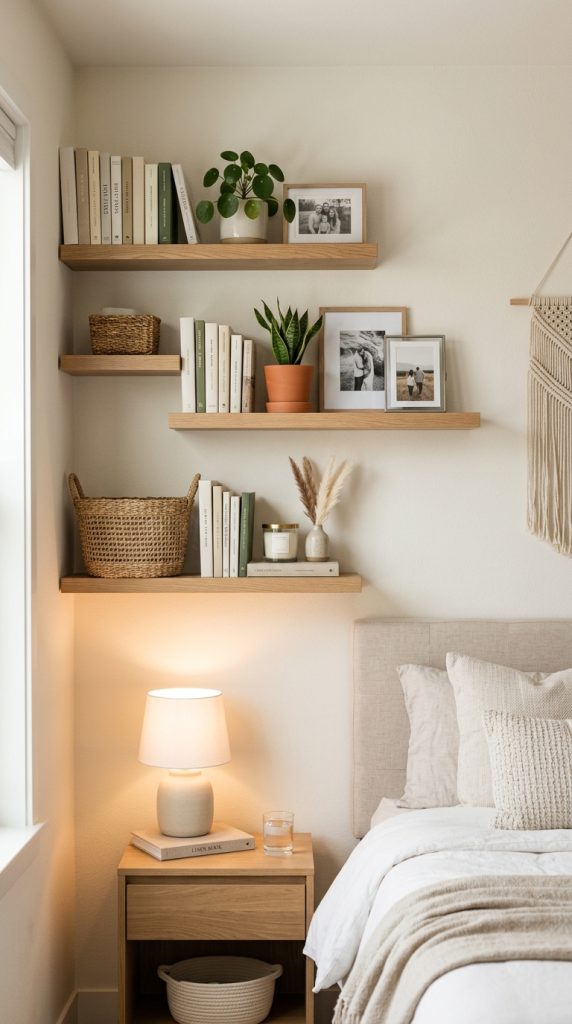
Floating shelves provide an attractive way to combine decoration and organization within a bedroom. This idea works particularly well for small rooms because it uses vertical wall space rather than floor space. Shelves can display books, framed photographs, decorative objects, plants, and storage containers while keeping frequently used items accessible. The design can be adapted to various aesthetics, including minimalist style, modern design, and cozy decorative themes. Arranging shelves at different heights creates visual interest while maximizing storage opportunities. The shelves can also act as focal points above a desk, bed, or reading corner. Pinterest ideas often showcase floating shelves because they offer flexibility and can evolve as organizational needs change. Decorative baskets placed on the shelves help conceal small items while maintaining a clean appearance. Consistent spacing and coordinated decorative elements contribute to a polished look. This project is beginner friendly because it requires only basic measurements and installation techniques. Proper planning ensures that shelves complement the room rather than overcrowding it. By combining display space and hidden storage, floating shelves support both practical organization and aesthetic enhancement.
To create floating shelf storage, begin by measuring the available wall area and determining the desired shelf arrangement. Select shelf materials that match the room’s decoration style and ensure they are strong enough to support intended items. Mark installation points carefully using a level to maintain straight alignment. Install wall anchors where necessary to provide secure support. After attaching the shelves, organize items according to both function and appearance. Place larger objects toward the ends and smaller decorative pieces throughout the arrangement to create balance. Storage baskets can hold accessories, chargers, notebooks, or other small belongings that would otherwise contribute to clutter. Decorative labels can further improve organization. Avoid overloading shelves, as excessive items reduce visual appeal and functionality. Periodically review shelf contents and remove unnecessary objects to maintain a clean aesthetic. This easy project combines storage, decoration, and organization in a way that enhances both room appearance and usability.
Idea 2: Decorative Pegboard Wall Organizer
How to Create
A decorative pegboard organizer offers a versatile solution for storing and displaying everyday items. This DIY tutorial transforms a simple wall section into a highly functional organizational feature. Pegboards are particularly useful because they can be customized with hooks, shelves, baskets, and containers that adapt to changing needs. In bedrooms, they can organize jewelry, accessories, stationery, beauty products, and small decorative pieces. The visual structure created by a pegboard contributes to an organized appearance while keeping essential items visible and accessible. Pinterest inspiration often highlights pegboards because they encourage creativity and personalization. The board can be painted to match the room’s color palette or decorated with patterns that enhance the overall aesthetic. Unlike traditional storage systems, pegboards provide flexibility because components can be rearranged whenever necessary. This adaptability makes them suitable for students, renters, and anyone seeking a practical organization method. By combining decorative presentation with efficient storage, a pegboard creates a functional focal point that supports daily routines while reducing clutter throughout the room.
Creating a pegboard organizer begins with selecting a board size appropriate for the available wall space. Paint or decorate the surface before installation to achieve the desired aesthetic. Secure the pegboard to the wall using appropriate mounting hardware and ensure it remains stable under load. Add hooks, mini shelves, baskets, and containers according to organizational requirements. Group similar items together to improve efficiency and visual order. Jewelry can occupy one section, office supplies another, and decorative accents a separate area. Maintaining consistent spacing contributes to a balanced appearance. Lightweight containers can hold smaller items that might otherwise create clutter. Decorative touches such as framed prints or small plants can soften the functional appearance and integrate the organizer into the room’s decor. Review the arrangement regularly and adjust components as needs evolve. This step by step project offers excellent organization benefits while serving as a decorative design feature that enhances the room’s personality and practicality.

Idea 3: Under-Bed Storage Boxes
How to Create
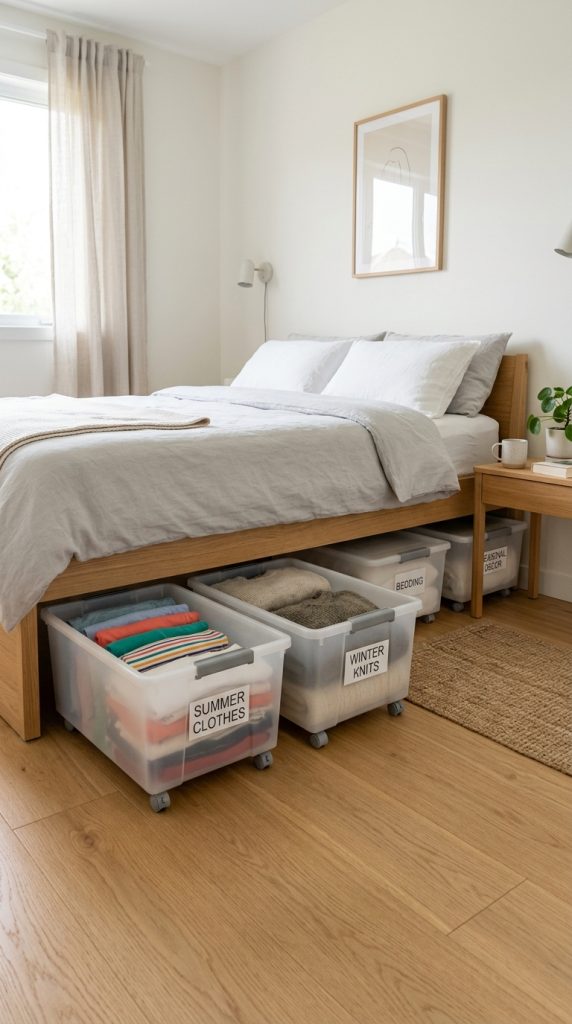
The space beneath a bed often remains underutilized despite offering significant storage potential. Transforming this area into an organized storage zone helps reduce clutter while preserving valuable floor space. Under-bed storage boxes provide a practical solution for seasonal clothing, extra bedding, books, shoes, and personal items that do not require daily access. Pinterest ideas frequently feature under-bed organization because it supports minimalist style by keeping belongings hidden from view. Storage containers can be selected or customized to complement the room’s aesthetic, creating a cohesive look even in concealed areas. Proper organization within the containers makes it easier to locate items when needed. Labeling systems further improve efficiency and prevent unnecessary searching. This approach is particularly valuable in small bedrooms where storage options are limited. By maximizing existing space rather than adding bulky furniture, under-bed storage contributes to a cleaner and more open environment. The project requires minimal materials and can be completed quickly, making it an ideal beginner friendly organization solution.
To implement under-bed storage effectively, begin by measuring the available clearance beneath the bed frame. Choose containers that fit comfortably while allowing easy access. Storage boxes with wheels can simplify retrieval, especially when larger items are stored. Sort belongings into categories before placing them in containers. Seasonal clothing, spare linens, and infrequently used accessories should each occupy separate containers whenever possible. Labels provide clear identification and help maintain organization over time. Decorative coverings or coordinated storage bins can contribute to a polished appearance. Avoid storing unnecessary items simply because space is available. Periodic reviews help ensure the storage area remains functional and free from accumulated clutter. This easy project demonstrates how thoughtful planning can transform overlooked space into a valuable organizational asset that supports efficient bedroom management while maintaining an attractive aesthetic.
Idea 4: Mason Jar Vanity Organizer
How to Create
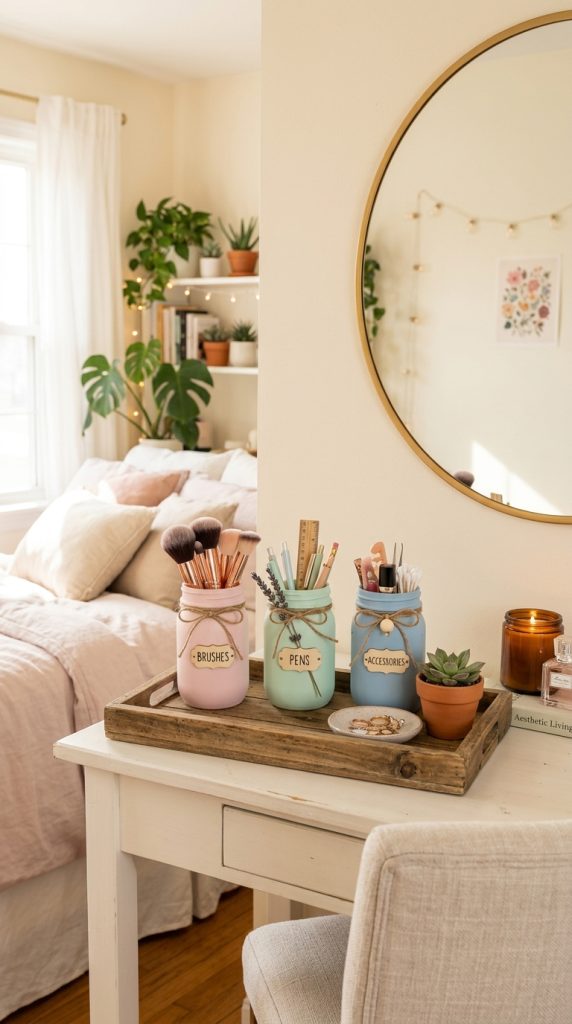
A mason jar vanity organizer combines charming decoration with practical storage for small bedroom essentials. Glass jars provide transparent storage that makes it easy to locate frequently used items while contributing to a coordinated decorative theme. This DIY concept is particularly useful for organizing makeup brushes, pens, hair accessories, cotton pads, and other small objects that often create surface clutter. Pinterest inspiration frequently showcases jar organizers because they are adaptable to various styles, from rustic aesthetics to modern design. Decorative elements such as paint, ribbon, fabric, or labels can personalize the jars while integrating them into the room’s existing decor. Grouping multiple jars on a tray creates a unified arrangement that appears intentional rather than cluttered. The transparency of the containers encourages better organization because contents remain visible at all times. This project is affordable, accessible, and highly customizable, making it suitable for beginners interested in combining storage with attractive decoration. Proper arrangement transforms ordinary containers into a stylish organizational feature.
Creating a mason jar organizer begins by thoroughly cleaning and preparing the jars. Decorative finishes can be applied according to the desired aesthetic. Painted lids, wrapped twine, or adhesive labels provide opportunities for customization without requiring advanced crafting skills. Arrange jars on a tray, wooden board, or decorative platform to establish a cohesive display. Assign each container a specific purpose to maintain organization. One jar may hold writing supplies, another hair accessories, and another cosmetic tools. Consistency in categorization improves efficiency and reduces clutter. Position the organizer on a vanity, desk, shelf, or dresser where frequently used items remain easily accessible. Avoid overcrowding jars, as excessive contents can reduce functionality. Periodically remove unused items and reorganize contents as needed. This creative project offers a simple yet effective way to enhance both storage and decoration while contributing to a tidy and aesthetically pleasing bedroom environment.
Idea 5: Fabric Basket Closet System
How to Create
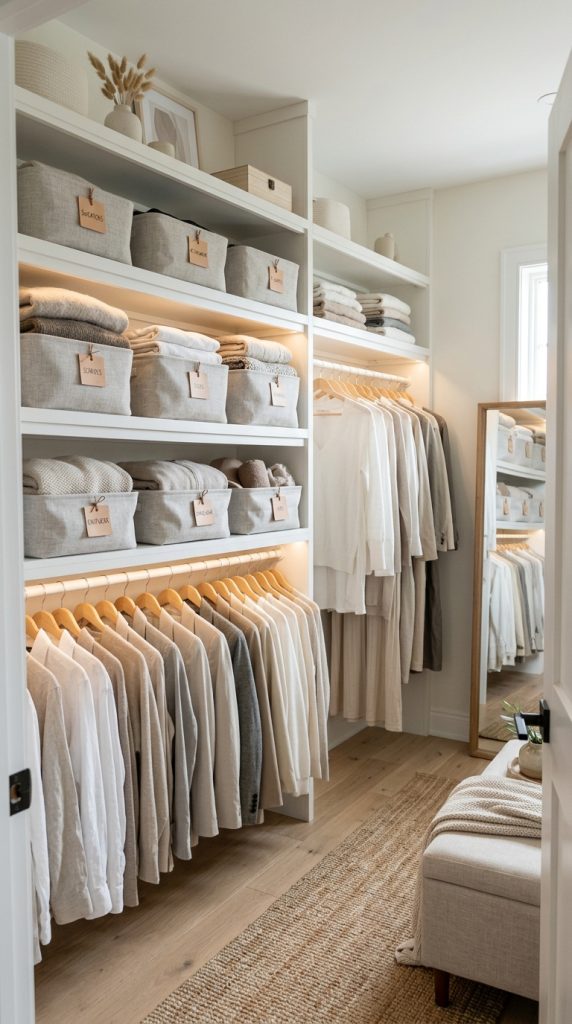
Closets often become disorganized because small items lack designated storage areas. Fabric basket systems provide a practical method for categorizing belongings while maintaining an attractive appearance. These storage solutions are widely featured among Pinterest ideas because they combine functionality, flexibility, and visual appeal. Fabric baskets are available in various sizes and can be coordinated with existing bedroom decor. They help organize accessories, folded clothing, seasonal items, and personal belongings that might otherwise accumulate in piles. The soft materials create a welcoming aesthetic while protecting delicate items from damage. Consistent basket placement contributes to a sense of order and efficiency. Labels further improve usability by clearly identifying contents. This organizational method supports minimalist style because it conceals clutter while preserving accessibility. Fabric baskets are also portable, allowing users to rearrange storage configurations as needs change. Their versatility makes them suitable for closets of various sizes and layouts, providing practical solutions for maintaining long-term organization.
To create a fabric basket closet system, start by decluttering and categorizing closet contents. Measure shelves and storage areas to determine appropriate basket sizes. Select baskets that fit efficiently while leaving adequate access space. Assign each basket a specific category such as accessories, workout clothing, seasonal garments, or miscellaneous items. Labels help ensure consistent organization and simplify retrieval. Arrange baskets according to frequency of use, placing commonly accessed items at convenient heights. Coordinated colors and textures contribute to a cohesive appearance that enhances overall home decor. Avoid overfilling baskets, as excessive contents can reduce effectiveness and create visual disorder. Conduct regular maintenance sessions to return misplaced items and reassess storage needs. This beginner friendly setup method improves closet functionality while creating a clean, organized, and aesthetically pleasing storage environment.
Idea 6: Wall Grid Inspiration Board
How to Create
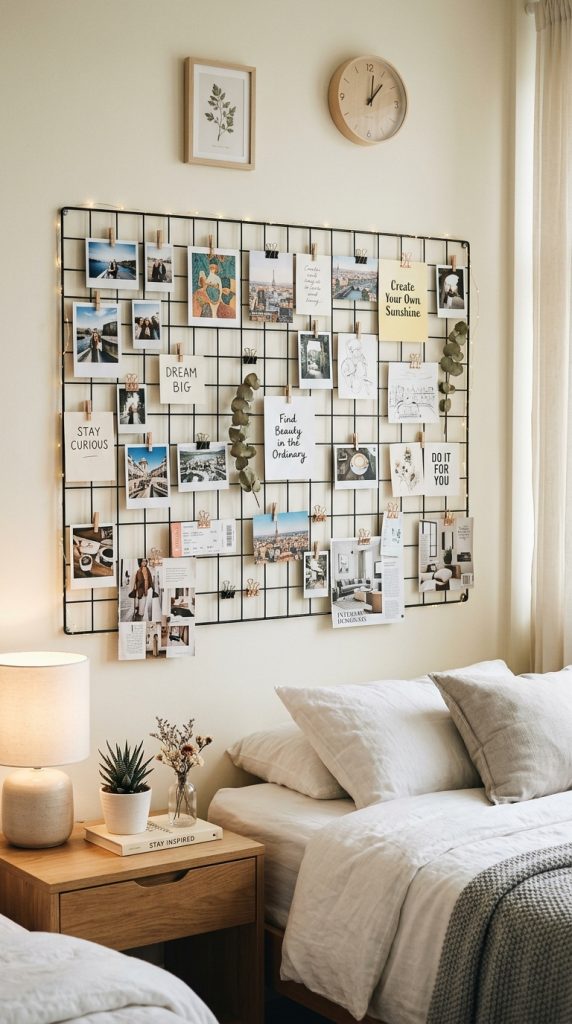
A wall grid inspiration board serves both organizational and decorative purposes within a bedroom. This project provides a dedicated area for displaying notes, photographs, reminders, artwork, and creative inspiration. Pinterest users frequently embrace wall grids because they offer flexibility while contributing to a modern aesthetic. The open structure encourages personalization and allows the display to evolve over time. Unlike traditional bulletin boards, wall grids maintain a cleaner appearance and integrate easily into contemporary bedroom decor. They can support planning activities, creative projects, academic schedules, or personal goals. Decorative clips, cards, and lightweight accessories add visual interest while preserving functionality. The arrangement can reflect individual preferences without overwhelming the room. This combination of organization and self-expression makes wall grids particularly appealing for students, artists, and anyone seeking a structured yet creative display system. The project requires minimal materials and offers significant customization opportunities, making it a popular DIY tutorial among beginners.
To create a wall grid board, select a metal grid panel that fits the available wall area. Secure it properly using suitable mounting hardware and verify stability before adding accessories. Organize displayed items into categories such as reminders, inspiration images, schedules, or decorative elements. Use clips, hooks, and mini baskets to increase functionality while maintaining visual balance. Avoid overcrowding the grid, as excessive content can diminish both organization and aesthetic appeal. Introduce coordinated colors or themes to create a cohesive display that complements the room’s overall design. Update content regularly to keep the board relevant and useful. This step by step project provides an efficient method for organizing information while contributing to an attractive decorative feature that reflects personal interests and supports daily planning activities.
Idea 7: Hanging Corner Storage Station
How to Create
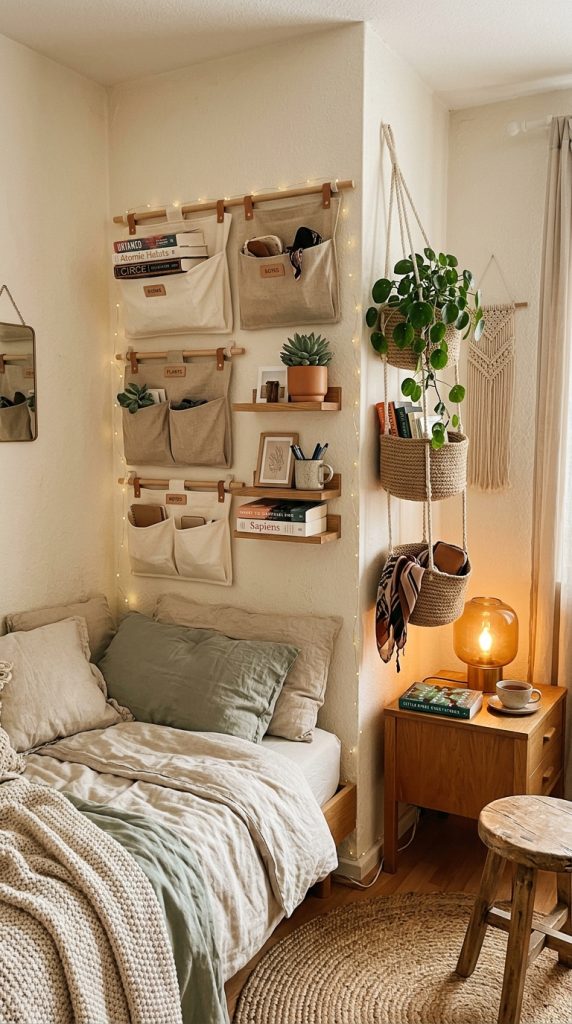
Bedroom corners often remain unused despite offering valuable organizational opportunities. A hanging corner storage station transforms these overlooked areas into practical storage zones without consuming additional floor space. Pinterest inspiration frequently highlights corner solutions because they maximize room efficiency while maintaining an open layout. Hanging organizers can store books, accessories, plants, decorative items, or personal belongings in a visually appealing arrangement. The vertical design supports organization while contributing decorative interest. Materials such as rope, fabric pockets, wooden shelves, or hanging baskets can be adapted to suit various aesthetics. This project works especially well in compact bedrooms where every available space matters. By utilizing corners effectively, homeowners can reduce clutter elsewhere in the room and create designated storage areas for frequently used items. The project supports modern design principles that emphasize functionality, efficiency, and intentional use of space while remaining accessible to beginners.
Creating a hanging corner station begins by identifying a suitable corner with adequate wall support. Measure the area carefully and determine the desired storage configuration. Install secure mounting hardware capable of supporting anticipated weight. Arrange hanging shelves, baskets, or fabric organizers according to storage needs. Place heavier items on lower levels and lighter decorative elements higher up to maintain stability. Consistent spacing contributes to an organized appearance and improves accessibility. Decorative accents such as plants, framed prints, or coordinated containers enhance visual appeal. Review stored items periodically to ensure the area remains functional rather than becoming a collection point for miscellaneous clutter. This easy project demonstrates how thoughtful planning can transform unused space into a productive organizational feature that contributes both storage and decorative value to the bedroom.
Idea 8: Decorative Drawer Divider System
How to Create
Drawers frequently become disorganized because small items shift and mix together over time. Decorative divider systems provide a simple solution that improves accessibility while maintaining order. Pinterest ideas often feature drawer organization because it creates immediate improvements in daily routines. Dividers help categorize clothing, accessories, stationery, beauty products, and personal belongings. Organized drawers reduce search time and encourage consistent maintenance. Decorative materials can enhance the appearance of the storage system even though it remains largely hidden. Fabric-covered dividers, patterned liners, and coordinated containers contribute to a more enjoyable organizational experience. This approach aligns with minimalist style by ensuring every item has a designated location. The project is beginner friendly, affordable, and adaptable to drawers of different sizes. Effective drawer organization supports broader room organization goals by preventing clutter from accumulating behind closed storage spaces.
To create decorative drawer dividers, begin by measuring drawer dimensions accurately. Select divider materials such as lightweight wood, cardboard, acrylic, or adjustable inserts. Customize the appearance using decorative paper, fabric, or paint that complements the room’s aesthetic. Create sections based on item categories and arrange contents logically according to frequency of use. Smaller compartments work well for accessories, while larger sections accommodate clothing or bulkier items. Labels can further improve efficiency and consistency. Avoid overcrowding compartments, as excess items undermine the organizational system. Conduct regular reviews to remove unused belongings and maintain order. This setup method provides a practical and visually pleasing storage solution that enhances daily convenience while supporting long-term organization throughout the bedroom.

Idea 9: Bedside Crate Storage Table
How to Create
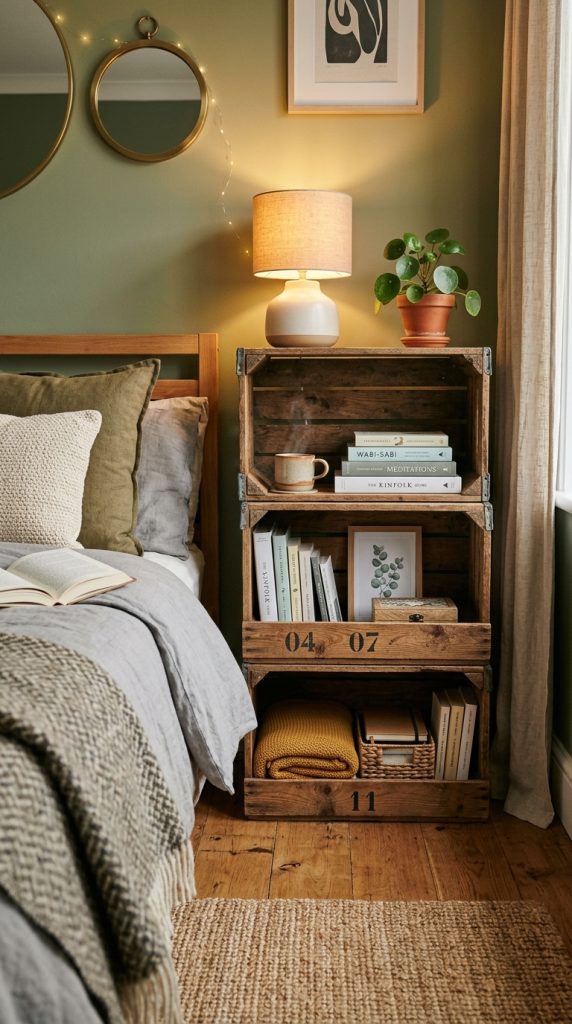
A bedside crate storage table combines furniture functionality with additional organization opportunities. Wooden crates can be transformed into attractive bedside units that provide storage space for books, electronics, notebooks, and decorative items. Pinterest inspiration frequently features crate projects because they offer flexibility, affordability, and customization potential. The open design allows items to remain accessible while encouraging organized placement. Crates can be stacked, painted, or modified to suit different bedroom aesthetics. This project is particularly useful for individuals seeking budget ideas that enhance both storage and decoration. The combination of visible shelving and tabletop space supports efficient use of limited square footage. By integrating organization directly into furniture, the project reduces clutter while contributing to a cohesive room design. The simplicity of the concept makes it accessible to beginners while still offering opportunities for creative personalization.
To create a bedside crate storage table, begin by selecting sturdy crates with dimensions suitable for the available space. Sand rough surfaces and apply paint or finish if desired. Arrange the crate vertically or horizontally depending on storage requirements. Secure stacked configurations to ensure stability and safety. Organize contents thoughtfully, reserving tabletop space for essential items such as lamps or clocks while using interior compartments for storage. Decorative baskets or containers can improve organization within the crate itself. Position frequently used items where they remain easily accessible. Periodically reassess stored contents to prevent accumulation of unnecessary objects. This creative project demonstrates how simple materials can be transformed into functional furniture that supports both organization and attractive bedroom decor.
Idea 10: Label-Based Aesthetic Storage Zone
How to Create
A label-based storage zone focuses on creating a fully organized system where every category of belongings has a designated location. This approach is highly popular among Pinterest ideas because it combines visual order with practical functionality. Labels improve efficiency by making storage locations immediately recognizable, reducing confusion and encouraging consistent habits. The aesthetic element comes from coordinated containers, uniform typography, and cohesive design choices that contribute to an attractive appearance. This organizational strategy works across shelves, baskets, drawers, and closet systems. It is especially beneficial for shared bedrooms or individuals seeking long-term organizational solutions. Clear categorization reduces clutter and simplifies maintenance while supporting a clean, modern aesthetic. The project can be adapted to virtually any room size or design preference, making it one of the most versatile DIY organization concepts available.
To establish a label-based storage zone, begin by sorting belongings into logical categories. Select containers that complement the room’s decor and provide appropriate storage capacity. Create clear labels using printed tags, handwritten cards, or decorative stickers. Apply labels consistently across all storage areas to establish a unified organizational system. Arrange containers according to usage patterns, placing frequently accessed items in convenient locations. Maintain visual consistency through coordinated colors, fonts, and placement methods. Regularly review categories to ensure the system continues meeting organizational needs. Remove unnecessary items and update labels when storage purposes change. This execution process creates a structured environment that supports daily organization while contributing to a polished and aesthetically pleasing bedroom design.

Common Beginner Mistakes and How to Avoid Them
Many DIY organization projects fail to achieve lasting success because of avoidable planning mistakes. One common issue is purchasing materials before assessing actual storage needs. This often results in unsuitable containers or ineffective layouts. Another mistake involves attempting too many projects simultaneously, which can lead to incomplete work and unnecessary clutter. Inaccurate measurements frequently cause installation problems and inefficient use of available space. Overdecorating storage areas is another challenge, as excessive decorative elements can reduce functionality and create visual clutter. Beginners also tend to store items without proper categorization, making organization difficult to maintain over time. To avoid these issues, start with a clear plan and focus on one area at a time. Measure carefully before purchasing materials and prioritize function before decoration. Use labels and designated categories to maintain consistency. Regular maintenance is equally important because even the best organizational systems require occasional adjustments. Thoughtful planning and realistic expectations help ensure that DIY projects remain practical, attractive, and sustainable.
Practical Tips for Better Results
Successful DIY bedroom organization relies on thoughtful decisions that balance appearance and functionality. Start by selecting materials that complement the existing room aesthetic to create a cohesive design. Focus on maximizing vertical space whenever possible, especially in smaller bedrooms. Use storage containers that fit specific purposes rather than relying on generic solutions. Group similar items together to improve accessibility and reduce clutter. Maintaining empty space within storage systems is equally important because overcrowding reduces efficiency. Consistent labeling helps preserve organization and simplifies daily routines. Choose versatile solutions that can adapt to changing needs over time. Incorporate decorative elements carefully so they enhance rather than overwhelm the space. Regular decluttering sessions prevent storage systems from becoming overloaded. Prioritize frequently used items by placing them within easy reach while reserving less accessible areas for occasional-use belongings. These practical strategies improve both organization and visual appeal, helping create a bedroom that remains functional, comfortable, and aesthetically pleasing over the long term.
Styling, Presentation, or Organization Ideas
The presentation of organizational projects significantly influences the overall appearance of a bedroom. Coordinated colors create visual harmony and contribute to a more polished environment. Neutral palettes support minimalist style, while soft accent colors can introduce personality without overwhelming the space. Matching storage containers establish consistency and help reduce visual clutter. Decorative labels, framed artwork, plants, and textured materials add warmth and character. Symmetrical arrangements often create a balanced appearance, while intentional asymmetry can provide a more contemporary aesthetic. Layering decorative elements with practical storage solutions helps maintain functionality while enhancing visual interest. Open shelving benefits from thoughtful spacing that prevents overcrowding. Fabric baskets and containers introduce softness, while wooden elements contribute warmth and structure. Consider the room as a complete composition rather than a collection of separate projects. Consistent styling choices help integrate organizational features into the overall home decor design, resulting in a cohesive and inviting bedroom environment.
Budget or Time Planning
Effective planning helps complete bedroom organization projects efficiently while controlling costs. Begin by prioritizing areas that require immediate attention and focusing resources accordingly. Repurposing existing materials often reduces expenses while encouraging creativity. Establish a realistic budget before purchasing supplies and compare project requirements to available resources. Simple projects such as jar organizers and drawer dividers can often be completed within a few hours, while shelving installations may require additional preparation and installation time. Creating a project schedule helps prevent interruptions and improves overall efficiency. Purchasing materials in advance reduces delays and allows for better planning. Breaking larger projects into smaller tasks makes them more manageable and less overwhelming. Focus on functionality first, then add decorative enhancements as resources permit. Careful planning ensures that DIY projects remain affordable and achievable while delivering meaningful improvements in organization and room appearance.
Creative Expansion and Advanced Inspiration
Once basic organizational systems are established, additional creative ideas can further enhance bedroom functionality and style. Consider combining multiple projects into a coordinated room makeover that integrates storage, decoration, and planning features. Custom color schemes can create stronger visual unity throughout the space. Advanced shelving arrangements, modular storage systems, and multifunctional furniture offer expanded organizational opportunities. Incorporating lighting elements can highlight decorative displays while improving usability. Personalized artwork, handmade accessories, and themed decorative collections provide opportunities for greater customization. Seasonal updates help keep the room fresh and adaptable throughout the year. Smart organization strategies can also be extended to study areas, wardrobes, and hobby spaces. Experimenting with different layouts may reveal more efficient ways to use available space. Continuous refinement allows organizational systems to evolve alongside changing needs. These advanced approaches build upon foundational DIY concepts while encouraging ongoing creativity, making the bedroom both highly functional and visually inspiring.