10 Lofi Vibes Apartment Ideas
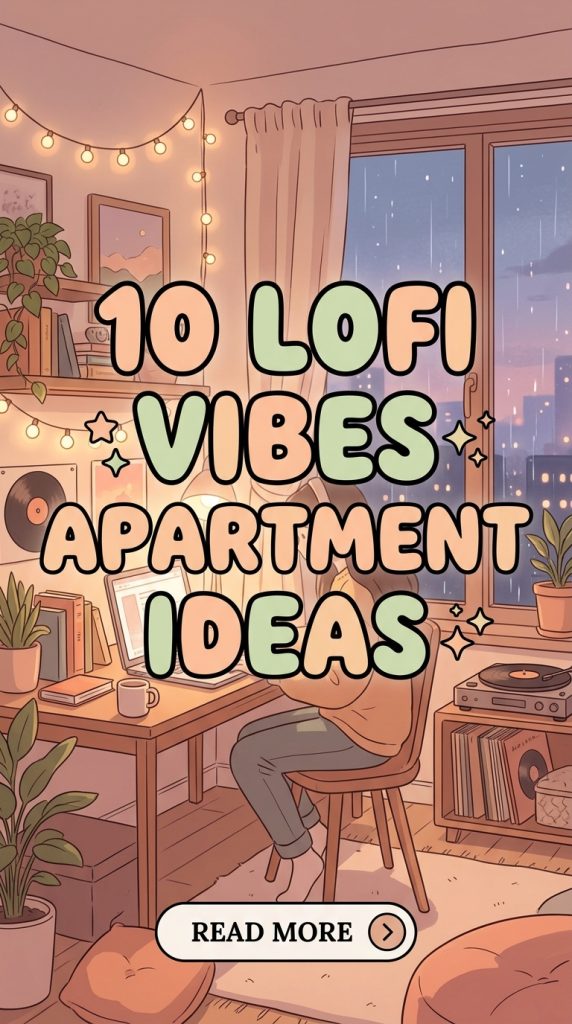
Creating a comfortable and visually calming apartment has become a popular goal for people seeking a more peaceful living environment. One design approach that continues to gain attention is the lofi-inspired apartment aesthetic. Lofi design combines soft lighting, cozy textures, natural materials, relaxed color palettes, and personalized decorative elements that encourage comfort and focus. Inspired by the calm atmosphere often associated with lofi music and study environments, this interior style emphasizes simplicity, warmth, and everyday functionality. Unlike highly polished or formal interiors, a lofi apartment feels lived-in, welcoming, and creatively inspiring. Many Pinterest ideas showcase this aesthetic because it is adaptable to apartments of different sizes and budgets. Whether decorating a studio apartment or updating a larger living space, the principles remain accessible and beginner friendly. This article explores ten practical lofi apartment ideas that can transform ordinary rooms into calming retreats. Readers will learn how to incorporate lighting, furniture arrangement, handmade decoration, organization techniques, and minimalist style elements while maintaining a cohesive aesthetic. Each idea includes practical guidance and step by step inspiration that can be adapted to individual spaces and personal preferences.
Why This Idea Is Trending or Useful
Lofi apartment design continues to attract attention because it combines comfort, creativity, and practicality in a way that suits modern lifestyles. Many people spend significant time at home studying, working, reading, or enjoying hobbies, making the atmosphere of a living space increasingly important. Pinterest ideas featuring lofi interiors often emphasize soft environments that support relaxation without sacrificing functionality. The appeal also comes from accessibility. Many lofi-inspired projects rely on affordable materials, DIY decoration techniques, and simple layout adjustments rather than expensive renovations. This makes the style suitable for renters, students, and first-time decorators. Another reason for its popularity is the balance between aesthetic appeal and organization. A well-designed lofi apartment incorporates storage solutions, natural textures, and thoughtful planning that help reduce visual clutter. The resulting environment often feels calmer and easier to maintain. The aesthetic also works well with modern design trends because it encourages personalization through books, artwork, plants, handmade items, and collected objects. Beginners can start with small changes and gradually build a cohesive look. This flexibility allows people to create a unique environment while following a clear design direction that remains practical, inviting, and visually appealing.
Materials and Preparation
Before starting a lofi apartment makeover, it is helpful to gather materials and establish a clear plan. Preparation ensures that decorative elements, furniture arrangements, and DIY projects contribute to a unified aesthetic rather than creating visual confusion. Common materials include warm light sources, textured fabrics, throw blankets, cushions, wooden accents, indoor plants, framed artwork, storage containers, bookshelves, rugs, and decorative accessories. Handmade decoration items can also enhance authenticity and personality. Essential tools may include measuring tape, basic hand tools, wall-safe hanging materials, storage organizers, and cleaning supplies. Planning should begin with evaluating the apartment layout and identifying areas that feel empty, cluttered, or underutilized. Consider how each room is used throughout the day and determine where improvements can support comfort and functionality. Selecting a consistent color palette is also beneficial. Neutral shades combined with earthy tones often support a lofi atmosphere. Cleaning and decluttering before decorating creates a stronger foundation for the project. Creating a mood board using Pinterest inspiration can help visualize goals and ensure consistency. Thoughtful preparation reduces unnecessary purchases and makes it easier to achieve a cohesive and aesthetically pleasing result throughout the apartment.
Idea 1: Warm Ambient Lighting Corner
How to Create
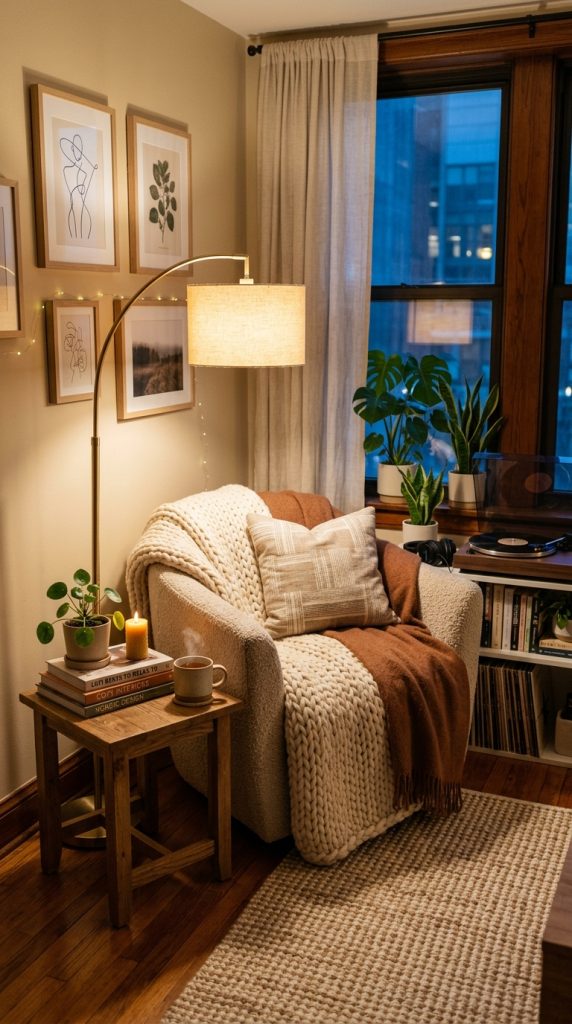
A dedicated ambient lighting corner serves as a foundational element of a lofi-inspired apartment. The goal is to replace harsh overhead illumination with softer layers of light that create warmth and depth. This design concept focuses on building a relaxing atmosphere that supports reading, studying, listening to music, or quiet reflection. Begin by selecting an unused corner or a section of the living room where natural traffic flow will not be interrupted. Add a comfortable chair, floor cushion, or small loveseat to establish a functional seating area. Layer textures through blankets, cushions, and rugs to make the space feel inviting. Warm-toned lighting creates visual comfort and helps define the corner as a separate retreat within the apartment. Books, framed artwork, and subtle decorative objects can reinforce the aesthetic without overwhelming the area. This approach works particularly well in small apartments because it creates a dedicated zone without requiring structural changes. The result is a cozy destination that encourages relaxation while contributing to the overall lofi atmosphere.
To build this setup, start by cleaning and organizing the selected corner. Position seating first and place a textured rug underneath to visually anchor the area. Add one primary warm light source, such as a floor lamp or table lamp, and supplement it with secondary lighting for depth. Place books on a nearby shelf or side table to enhance functionality. Introduce natural elements such as small indoor plants to soften the appearance of the space. Keep decorative accessories minimal to maintain a minimalist style while preserving visual interest. Storage baskets can help keep the area organized without disrupting the aesthetic. Test the lighting at different times of day and adjust placement to avoid harsh shadows. This easy project requires relatively few materials and can often be completed within a single afternoon. The combination of layered lighting, comfortable seating, and thoughtful organization creates a highly effective lofi-inspired retreat.
Idea 2: Floor Seating Relaxation Zone
How to Create
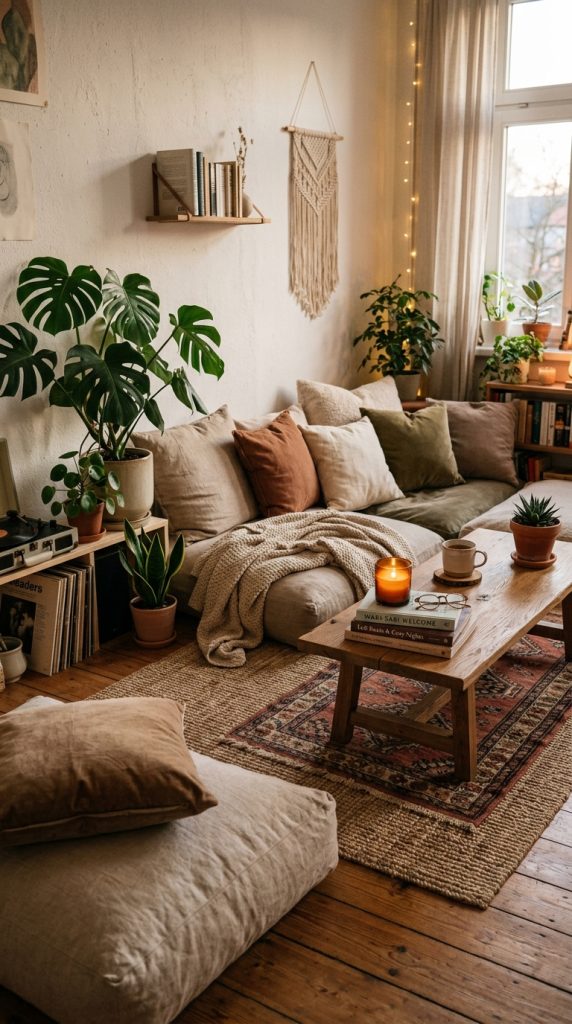
Floor seating areas are frequently featured in Pinterest ideas because they create a casual and welcoming atmosphere. In a lofi apartment, this concept encourages comfort while maximizing flexibility within limited square footage. Instead of relying exclusively on traditional furniture, a floor seating zone uses cushions, low tables, and layered textiles to establish a relaxed environment. The aesthetic works particularly well for reading, journaling, creative work, or casual social gatherings. Textures play an important role in defining the space. Thick rugs, knitted throws, and soft cushions create visual warmth while improving physical comfort. A low-profile arrangement also helps rooms feel more open by preserving sight lines. Neutral and earthy tones support the calming nature of the design. Additional decorative elements such as books, artwork, and plants can enhance the atmosphere while maintaining consistency with the broader lofi aesthetic. This setup is beginner friendly because it requires minimal furniture investment and can be customized gradually over time.
Begin the execution process by selecting a clear area of the apartment and removing unnecessary items. Place a large rug as the foundation for the zone and arrange cushions in a way that supports different seating positions. Introduce a low table that can be used for drinks, notebooks, or creative projects. Layer additional textiles to increase comfort and visual depth. Use nearby shelving or storage containers to keep essential items accessible without creating clutter. Small decorative objects should be intentionally chosen to reinforce the aesthetic rather than filling empty space unnecessarily. Lighting remains important, so position a warm lamp nearby to support evening use. The arrangement should remain flexible and easy to modify based on changing needs. Through careful planning and thoughtful material selection, a floor seating relaxation zone can become one of the most inviting areas in a lofi-inspired apartment.
Idea 3: Bookshelf Feature Wall
How to Create
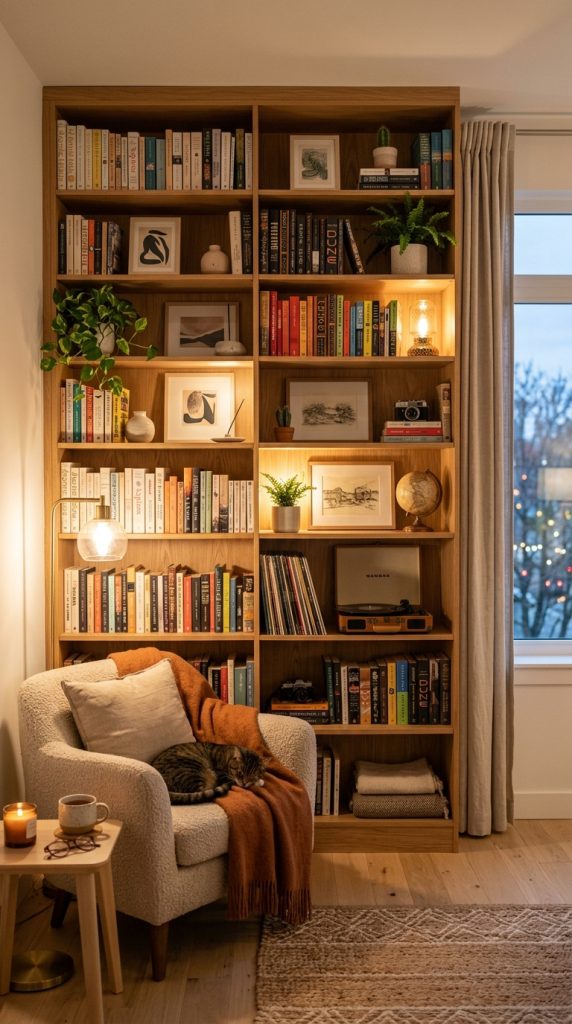
A bookshelf feature wall combines organization and decoration in a way that aligns naturally with lofi apartment aesthetics. Books contribute texture, personality, and visual interest while creating an environment associated with learning and creativity. Rather than treating shelving as purely functional storage, this concept transforms it into a central design element. A carefully arranged bookshelf can display books, framed prints, plants, notebooks, and handmade decoration pieces. The objective is to create balance between organization and visual expression. Varying heights, colors, and textures help prevent the display from appearing repetitive. This design approach works in living rooms, bedrooms, or dedicated workspaces. It also supports a minimalist style because carefully curated shelves reduce the need for excessive decorative accessories elsewhere in the apartment. The result is an aesthetically pleasing focal point that enhances both functionality and atmosphere.
Start by organizing books into categories and removing items that no longer serve a purpose. Position shelves where they can become a visual anchor for the room. Arrange books both vertically and horizontally to create variation. Incorporate small plants and decorative objects at intervals to prevent overcrowding. Leave some open space on shelves to maintain visual balance and reduce clutter. If wall-mounted shelving is used, ensure measurements and installation are completed carefully during preparation. Add subtle lighting nearby to highlight textures and create warmth during evening hours. Storage boxes can conceal less attractive items while maintaining organization. This creative project encourages personalization because displays can evolve over time. By combining practical storage with intentional styling, a bookshelf feature wall contributes significantly to the calm and inspiring atmosphere associated with lofi apartment design.
Idea 4: Indoor Plant Sanctuary
How to Create
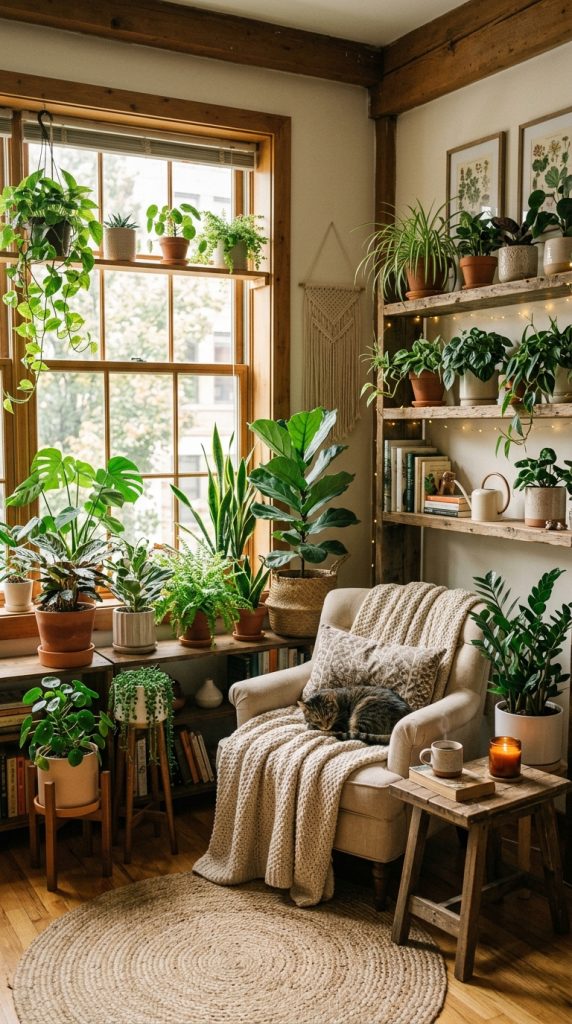
Indoor plants play a central role in many trending ideas because they introduce natural textures, organic shapes, and visual softness into interior spaces. In a lofi apartment, plants help create a balanced environment that feels calm and connected to nature. A dedicated plant sanctuary can range from a simple corner arrangement to a larger collection distributed throughout the apartment. The objective is not quantity but thoughtful placement. Plants soften hard architectural lines and complement wooden furniture, textiles, and minimalist decor. They also provide seasonal visual interest as they grow and change over time. Combining different heights and leaf shapes creates depth while maintaining harmony. This approach supports both aesthetic goals and practical organization because plant groupings help define functional zones within a room.
To create this setup, evaluate available natural light and choose locations that support healthy growth. Select containers that align with the apartment’s overall design direction. Arrange plants at varying heights using stands, shelves, and tables. Grouping several plants together often creates a stronger visual impact than scattering them randomly. Incorporate decorative trays to keep watering supplies organized and protect surfaces. Position seating or reading areas nearby to take advantage of the calming atmosphere. Regular maintenance should be included in planning to ensure the sanctuary remains attractive. Keep surrounding decor relatively simple so the plants remain the focal point. This beginner friendly project can be expanded gradually as confidence and experience increase. Through careful placement and organization, an indoor plant sanctuary contributes significantly to a welcoming lofi aesthetic.
Idea 5: Minimalist Study Nook
How to Create
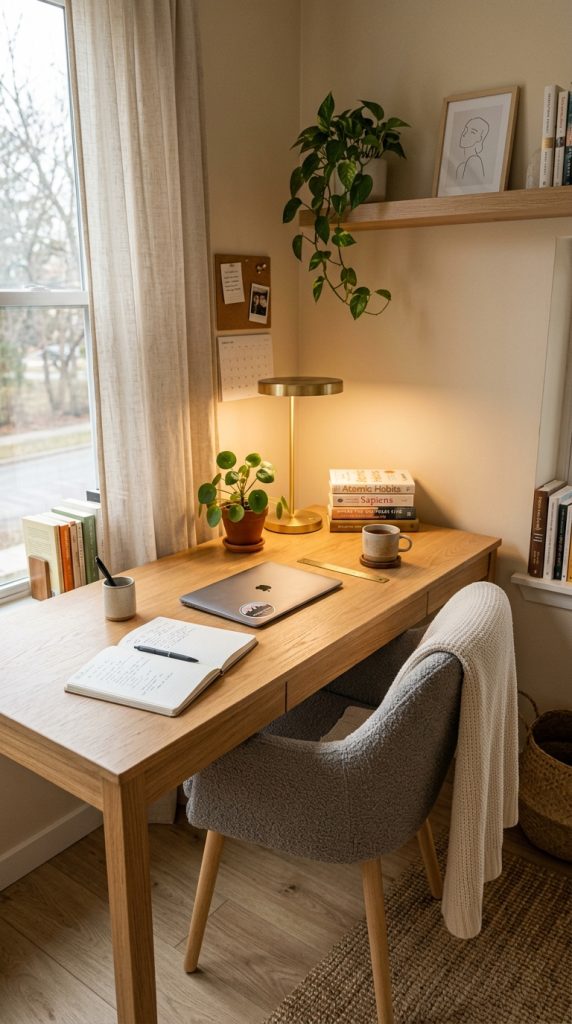
A minimalist study nook reflects one of the most recognizable aspects of lofi inspiration. These spaces emphasize focus, comfort, and visual simplicity. The goal is to create an environment that supports productive activities while maintaining a calm atmosphere. Unlike traditional offices that may prioritize storage and equipment, a lofi study nook balances functionality with aesthetic appeal. Clean surfaces, warm lighting, and limited distractions encourage concentration. Books, notebooks, and selected decorative objects provide personality without overwhelming the workspace. A neutral color palette helps maintain consistency while reducing visual fatigue. This idea is particularly useful for apartment dwellers who need a dedicated workspace but lack an entire room for an office.
Begin by selecting a quiet section of the apartment and defining clear boundaries for the workspace. Position a desk near natural light whenever possible. Use organization tools to keep essential materials accessible while minimizing clutter. Install shelving above the desk if additional storage is needed. Introduce warm lighting to support evening work and create atmosphere. Decorative elements should be limited to items that inspire creativity or serve a practical purpose. Maintain open desk space to reinforce the minimalist style. Consider cable management solutions to improve organization and visual cleanliness. Regularly review and remove unnecessary items to preserve the effectiveness of the setup. This easy project demonstrates how thoughtful planning and intentional design choices can create a productive yet aesthetically pleasing environment within a limited apartment footprint.
Idea 6: Vintage-Inspired Listening Area
How to Create
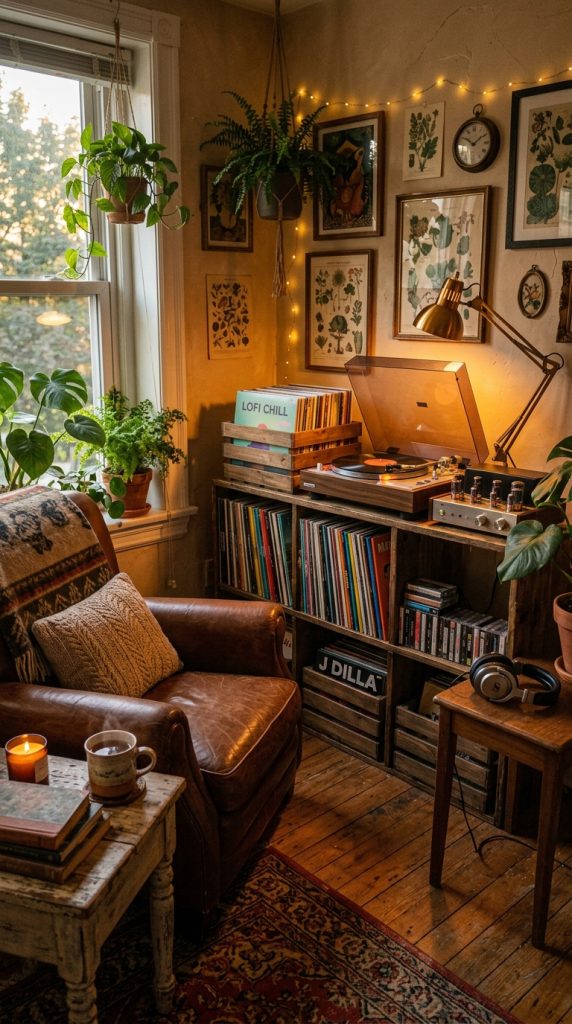
A listening area dedicated to music appreciation aligns naturally with lofi culture and interior design. This concept focuses on creating a comfortable space where music becomes a central experience rather than background noise. The area can include seating, storage for audio collections, artwork, and warm lighting. Vintage-inspired elements often complement the aesthetic because they introduce character and texture. The objective is to create an atmosphere that encourages slowing down and engaging with music intentionally. Decorative choices should support relaxation and personal expression while maintaining overall design consistency. This type of creative project can become a focal point within a living room or bedroom.
Start by selecting a location with enough space for comfortable seating and storage. Arrange furniture to encourage a relaxed listening posture. Organize music-related items neatly to avoid visual clutter. Use shelves or storage units to keep collections accessible and well presented. Add textiles that improve comfort and reinforce the cozy atmosphere. Lighting should remain soft and layered, supporting both functionality and ambiance. Display selected artwork that complements the mood without overwhelming the space. Consider how movement through the room will affect the layout and adjust accordingly. Through thoughtful organization and decoration, the listening area becomes more than a functional corner. It evolves into a personalized retreat that supports relaxation and creative inspiration while contributing to the broader lofi apartment aesthetic.
Idea 7: Cozy Window Retreat
How to Create
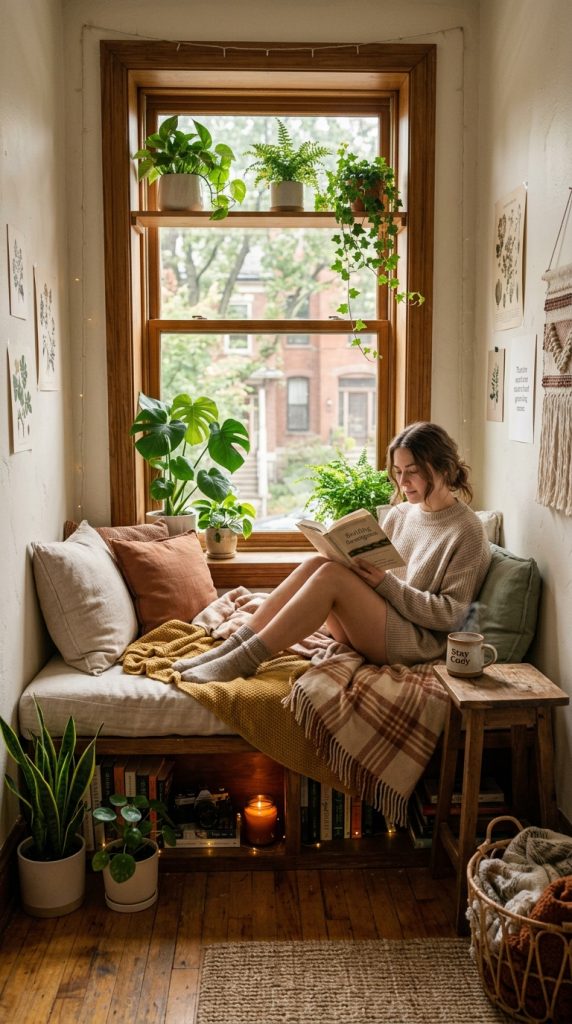
Windows offer unique opportunities for creating inviting lofi spaces because they provide natural light and visual connection to the outdoors. A cozy window retreat transforms an ordinary window area into a destination for reading, reflection, or creative activities. The concept emphasizes comfort, simplicity, and visual balance. Cushions, blankets, and nearby shelving help establish functionality while maintaining an aesthetic appearance. Natural light changes throughout the day, adding dynamic qualities that enhance the atmosphere. This design idea works well in apartments of different sizes and can often be completed with minimal materials. The resulting area supports relaxation while increasing the usefulness of existing architectural features.
Begin by evaluating available space around the window and removing unnecessary items. Add comfortable seating through cushions, benches, or compact chairs. Layer textiles to increase comfort and visual warmth. Position a small side table nearby for books or beverages. If privacy is required, select window treatments that maintain softness while controlling light levels. Nearby shelving can provide storage and decorative opportunities without overwhelming the retreat. Use plants and artwork sparingly to reinforce the aesthetic. Maintain clear organization so the area remains practical and inviting. This beginner friendly project demonstrates how thoughtful planning can transform underutilized areas into attractive and functional destinations within a lofi apartment.
Idea 8: Handmade Wall Art Display
How to Create
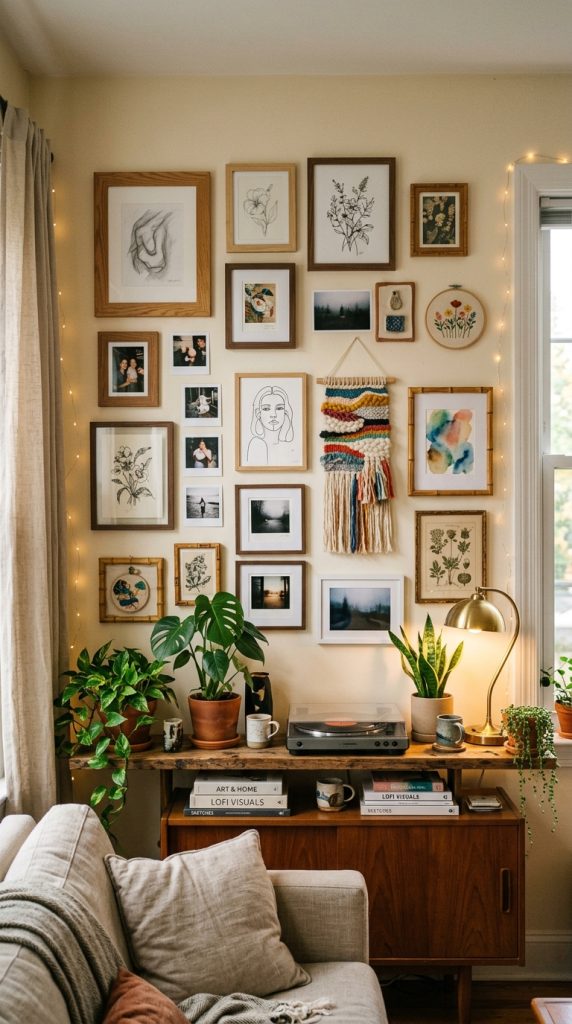
Handmade wall art contributes authenticity and individuality to a lofi apartment. Unlike mass-produced decoration, handmade pieces often reflect personal interests, memories, and creative efforts. This idea focuses on creating a curated display that enhances visual interest while maintaining a cohesive aesthetic. Artwork can include sketches, photography, typography, fabric pieces, or mixed-media creations. The objective is to establish a focal point that feels personal rather than overly polished. Consistency in framing, spacing, or color palette helps unify the display. This approach supports DIY creativity while providing an accessible method for transforming blank walls.
To implement this project, begin by gathering artwork and evaluating how different pieces relate visually. Plan the arrangement before installation by testing layouts on the floor. Use measuring tools to ensure balanced spacing and alignment. Select framing or mounting methods that complement the apartment’s design direction. Avoid overcrowding by allowing sufficient negative space between pieces. Integrate the display with nearby furniture and decorative elements for a cohesive appearance. Consider lighting placement to enhance visibility and emphasize texture. Review the arrangement periodically and update pieces as interests evolve. This step by step approach creates a personalized wall display that reinforces the creative and relaxed atmosphere characteristic of lofi apartment design.
Idea 9: Neutral-Tone Bedroom Escape
How to Create
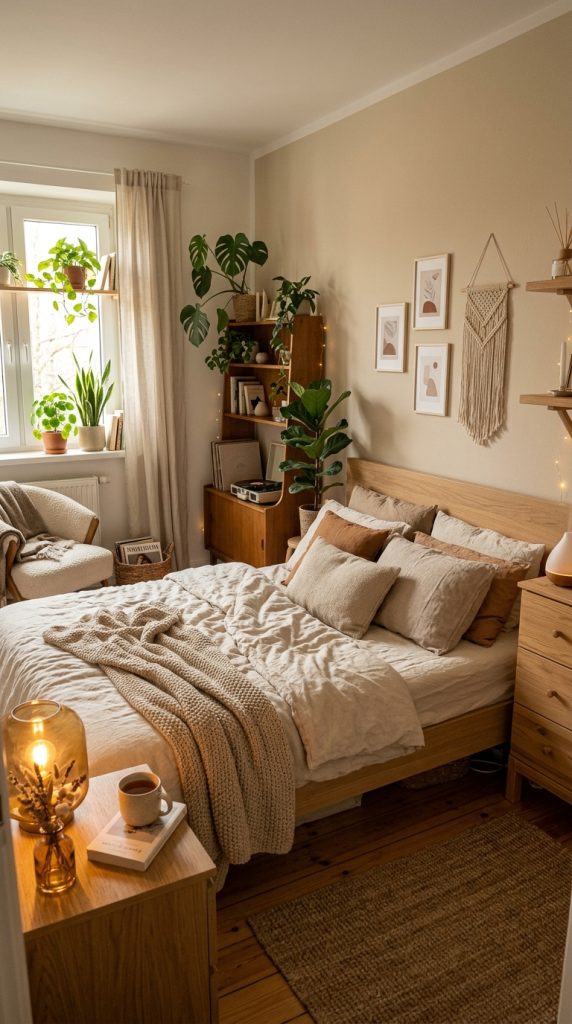
The bedroom is often the most important area for establishing a lofi atmosphere because it serves as a primary space for rest and recovery. A neutral-tone bedroom escape emphasizes comfort, simplicity, and visual calm. Soft color palettes reduce stimulation while supporting relaxation. Textures become especially important because they provide depth without relying on strong colors or complex patterns. Layered bedding, rugs, curtains, and cushions help create warmth and comfort. The objective is to design a space that feels peaceful and cohesive while remaining functional for everyday use. This approach aligns closely with minimalist style principles and works effectively in apartments of any size.
Begin by decluttering surfaces and removing unnecessary decorative items. Select bedding and textiles that complement a consistent neutral palette. Position furniture to maximize circulation and create a sense of openness. Use storage solutions to maintain organization and minimize visual distractions. Introduce warm lighting through bedside lamps or accent lighting. Decorative elements should remain intentional and limited. Artwork, plants, and books can provide personality while supporting the overall atmosphere. Regular maintenance and organization are essential for preserving the calming effect. Through careful planning and thoughtful decoration, a neutral-tone bedroom becomes a comfortable retreat that embodies the essence of lofi living.
Idea 10: Creative Multi-Purpose Corner
How to Create
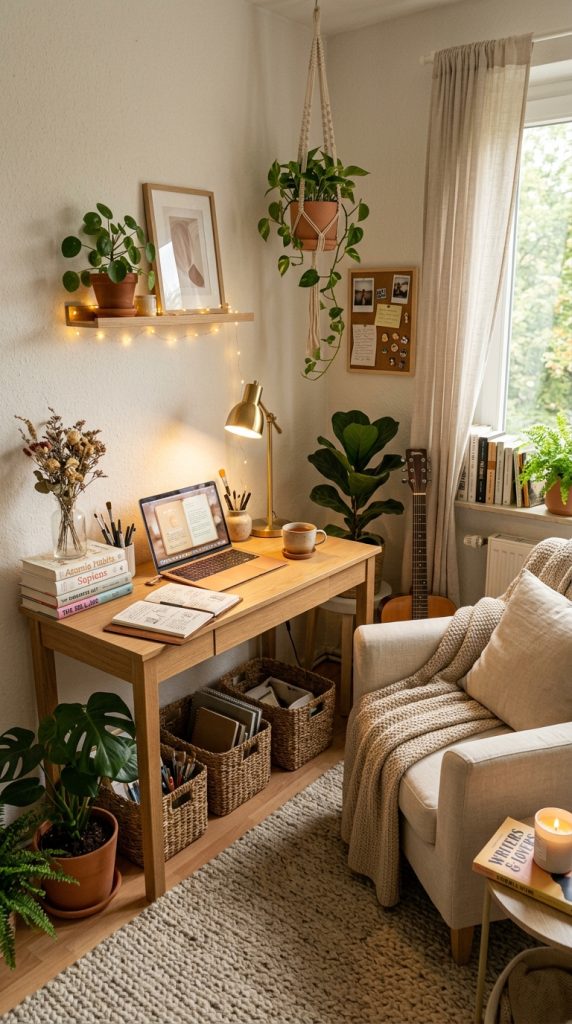
A multi-purpose corner reflects the practical nature of modern apartment living. Many people require spaces that support multiple activities without sacrificing aesthetics or organization. This concept combines functionality and creativity by creating a flexible zone that can accommodate reading, journaling, crafting, studying, or relaxation. The key is establishing clear organization systems that allow the space to adapt quickly. Furniture, storage, and decorative choices should support versatility while maintaining visual consistency. A well-designed multi-purpose corner maximizes limited square footage and reinforces the relaxed atmosphere associated with lofi interiors.
Start by identifying activities the space needs to support and planning accordingly. Select furniture that can serve multiple functions, such as storage benches or compact tables. Use containers, baskets, and shelving to keep materials organized and accessible. Define the area visually through rugs, lighting, or furniture placement. Decorative elements should contribute to the atmosphere without interfering with functionality. Regularly review the organization system and adjust based on changing needs. Maintain simplicity by storing items that are not frequently used. This easy project demonstrates how careful planning and creative ideas can transform a small section of an apartment into a highly effective and aesthetically pleasing space that supports a variety of activities.
Common Beginner Mistakes and How to Avoid Them
One common mistake when creating a lofi apartment is focusing exclusively on decoration while neglecting functionality. Attractive spaces must still support everyday activities. Another frequent issue involves overcrowding rooms with accessories. While personalization is important, excessive decoration can reduce the calming atmosphere that defines lofi design. Beginners also sometimes ignore organization, leading to visual clutter that competes with carefully chosen aesthetic elements. Inconsistent color palettes can create a disconnected appearance, making it difficult to establish a cohesive mood. Purchasing items before developing a clear plan often results in wasted resources and mismatched decor. To avoid these problems, begin with planning and establish priorities before acquiring materials. Focus on functionality first, then add decorative layers gradually. Maintain organization systems that support daily habits. Use Pinterest inspiration as guidance rather than copying individual spaces exactly. Consistent evaluation throughout the project helps identify areas that require adjustment. By avoiding these common mistakes, it becomes much easier to create a balanced and visually appealing lofi apartment.
Practical Tips for Better Results
Successful lofi apartment design relies on consistency and attention to detail. Start by selecting a limited color palette and applying it throughout the apartment. This creates visual continuity and supports a calming atmosphere. Prioritize quality organization systems because clutter can undermine even the most attractive decorative arrangements. Layer textures thoughtfully through rugs, cushions, blankets, and curtains to add warmth and depth. Use lighting strategically by combining multiple sources rather than relying on a single overhead fixture. Regular maintenance is equally important. Rearranging furniture, updating displays, and removing unnecessary items helps preserve freshness and functionality. When undertaking DIY projects, test ideas on a small scale before committing to larger changes. Document progress through photographs to evaluate design decisions objectively. Pay attention to how spaces feel during everyday use and make adjustments based on practical experience. Small improvements implemented consistently often produce stronger results than major redesigns completed without planning. These techniques help create a more cohesive and effective lofi-inspired environment.
Styling, Presentation, or Organization Ideas
Styling plays a major role in transforming individual design elements into a cohesive apartment aesthetic. Group decorative objects intentionally rather than distributing them randomly throughout the space. Books, plants, artwork, and textiles should work together to create visual balance. Shelving can be styled using a combination of practical items and decorative accents while maintaining organization. Layering different materials introduces depth and interest without overwhelming the room. Presentation also involves considering sight lines and focal points. Each room should contain at least one area that naturally attracts attention. Furniture placement can reinforce these focal points while supporting movement through the apartment. Organization solutions should remain visually integrated with the overall design rather than appearing purely functional. Storage baskets, containers, and shelving can contribute to the aesthetic when selected thoughtfully. Consistent styling throughout the apartment strengthens the sense of unity and helps individual rooms feel connected. Careful attention to presentation elevates both functionality and visual appeal.
Budget or Time Planning
Effective budget ideas begin with prioritizing projects based on impact. Instead of attempting a complete apartment transformation at once, focus on one room or area at a time. This approach allows for better financial control and more thoughtful decision-making. Create a list of essential materials and compare costs before making purchases. Repurposing existing furniture and decorative items can reduce expenses while maintaining creativity. DIY projects often provide cost-effective alternatives to purchasing new decor. Time planning is equally important. Schedule preparation, organization, and installation tasks separately to prevent overwhelm. Completing smaller projects first can build momentum and provide visible progress. Allocate time for decluttering before introducing new elements. Consider seasonal changes and how natural light affects different areas of the apartment throughout the year. Maintaining realistic expectations helps ensure the process remains enjoyable and manageable. Careful planning allows for gradual improvements that contribute to a cohesive and aesthetically pleasing result without unnecessary stress.
Creative Expansion and Advanced Inspiration
Once foundational lofi elements are established, additional creative projects can expand the aesthetic in unique ways. Consider developing themed zones dedicated to specific activities such as reading, art, journaling, or music appreciation. Advanced inspiration may involve creating custom furniture finishes, handmade decoration collections, or personalized wall installations. Experimenting with layered lighting arrangements can further enhance atmosphere and visual depth. Incorporating seasonal styling updates provides opportunities for refreshing the apartment while maintaining consistency. More experienced decorators may explore complex organization systems that integrate seamlessly into the design. Combining minimalist style principles with personal collections can create distinctive focal points. Creative expansion should remain intentional and aligned with the apartment’s overall direction. New additions should support functionality while enhancing visual harmony. Continual refinement helps spaces evolve naturally over time. By approaching the apartment as an ongoing creative project, it becomes possible to develop a highly personalized environment that reflects both practical needs and aesthetic preferences while remaining true to the calming spirit of lofi design.