
10 Western Party Tablecloths Ideas
Transforming dining and buffet setups into evocative frontier scenes requires an eye for foundational textiles that set the proper tone. Table linens dictate the palette, texture, and visual balance of any celebration, making them an essential focal point for thematic party styling. This detailed guide presents ten unique tablecloth concepts that adapt authentic ranch textures, classic frontier motifs, and contemporary rustic palettes for celebrations of all scales. Readers will learn practical techniques for sourcing durable fabrics, fabricating custom decorative coverings, and layering table textiles to produce high-impact presentations. Beyond decorative appeal, these ideas offer functional protection for dining surfaces against spills while establishing an organized framework for centerpieces, tableware, and food stations. Whether planning an intimate family gathering or an expansive outdoor banquet, understanding these tactile textile applications provides the creative inspiration needed to achieve an authentic western aesthetic with straightforward, accessible materials.
Why This Idea Is Trending or Useful
Western party tablecloths have gained substantial traction across modern decor boards because they bridge historic pastoral traditions with versatile, modern design principles. Modern hosts appreciate this aesthetic for its tactile warmth, utilizing honest materials like unbleached cotton, rough-spun burlap, and natural linen that outshine synthetic disposable options. The DIY appeal is particularly high; designing customized table dressings rarely demands advanced tailoring skills, as straight-line cuts, raw fraying, and simple fabric adhesives yield polished results. For beginners entering event decor, these textile projects serve as an easy project baseline with minimal barriers to execution. Working with utilitarian fabrics fits sensible budget ideas, as bulk yardage provides expansive surface coverage at a fraction of the cost of renting specialty linens. This adaptability allows planners to create memorable handmade accents that complement modern minimalist style or elaborate rustic celebrations with equal elegance.
Materials and Preparation
Deliberate textile selection and thorough station preparation are critical prerequisites for building polished, durable table dressings that hold up during active gatherings. Primary fabric options should include heavyweight unbleached burlap, red or navy gingham cotton checks, bleached feed sack canvas, and genuine bandana yardage. Key fabrication tools include sharp rotary fabric cutters, self-healing cutting mats, clear tailor rulers, heat-activated iron-on fusible tape, and a heavy steam iron. Before initiating any cuts, accurately measure your venue banquet tables, calculating a standard drop length of twenty to thirty centimeters along all sides for seated dining, or full floor-length drops for buffet presentations. Launder, dry, and thoroughly press pre-shrunk cottons to eliminate store fold lines, while unrolling burlap outdoors to release trapped surface fibers. Staging your cutting tools on an expansive, flat work surface ensures clean, straight edges and preserves consistent proportions across matching table sets.
Idea 1: Fringed Natural Jute Burlap Base
How to Create
Establish an authentic, grounded foundation by fabricating a full-length burlap cover detailed with natural perimeter fringe. Unroll twelve-ounce natural jute burlap across your work surface, cutting the fabric to match table dimensions with an added twenty-five-centimeter drop around each perimeter edge. To generate balanced, uniform fringe along the hems, use a seam ripper to lift and pull three horizontal boundary threads continuously across all four outer borders. Continue gently pulling successive threads outward until you establish an even, three-centimeter self-fringed border that softens the dense fabric perimeter. Run a bead of clear, flexible textile sealant or a clean lockstitch just inside the fringe boundary line to prevent runaway unraveling during party use. Lay this textured natural weave directly over bare wood or beneath complementary runners; the organic golden-brown hue provides an earthy base that grounds ceramic dinnerware, cast-iron accents, and amber glassware.

Idea 2: Vintage Red Gingham Bandana Patchwork Runner
Step-by-Step Guide
Combine graphic frontier motifs by constructing an interlocking patchwork overlay that joins classic bandanas with crisp check cotton. Cut six standard fifty-centimeter red paisley bandanas and an equivalent meterage of medium-scale red gingham cotton into identical twenty-five-centimeter squares using a rotary cutter. Arrange the alternating patterned squares into a long checkerboard layout two squares wide by eight squares long, adjusting overall length to span your primary dining table. Place adjacent fabric blocks with face sides touching, pinning the seams straight before bonding them using high-strength iron-on adhesive webbing pressed firmly with a hot iron. Turn the outer perimeter inward by one centimeter, pressing a crisp fold and securing the hemline with adhesive tape to eliminate raw fraying entirely. Layer this vibrant runner centrally over an unbleached canvas base cloth to deliver an energetic, nostalgic focal strip that anchors tabletop service without overwhelming place settings.

Idea 3: Stenciled Cattle Brand Unbleached Canvas
Execution Process
Introduce historical storytelling across wide banquet tables by imprinting minimalist livestock brand insignia across durable artist-grade canvas cloth. Cut ten-ounce unbleached natural cotton dropcloth canvas to your exact table specifications, accounting for generous thirty-centimeter overhangs along the ends and sides. Wash the textile in warm water without detergents to preshrink the weave and soften the drape before steam-ironing all flat surfaces. Carve traditional western cattle brand symbols—such as lazy bars, quarter circles, and rocker letters—into thick rubber linoleum printing blocks, or procure pre-cut vinyl stencil templates. Using a dense foam roller, lightly coat the stamp face with charcoal-gray matte textile ink, pressing the design firmly every thirty centimeters along the lower perimeter border of the fabric drop. Allow the water-based ink to cure for twelve hours before heat-setting the impressions with a dry pressing cloth, yielding a clean, repeatable custom pattern.

Idea 4: Waxed Canvas Cowboy Camp Cloth
Setup Method
Emulate authentic trail gear by fabricating a weather-resistant waxed canvas tabletop covering designed specifically for outdoor dining. Procure heavy brown or olive-drab cotton duck canvas cut to your dining tabletop dimensions with a clean fifteen-centimeter drop. Heat the canvas evenly using a standard heat gun or hair dryer set to high, then rub a block of natural paraffin and beeswax directly across the warm fibers in circular strokes until saturated. Direct hot air across the waxed surface once more, watching the wax melt and penetrate deep into the yarn structure to produce an aged, mottled patina with natural waterproofing. Fold the corner drops into neat mitered hospital folds, securing each corner beneath the table with a hidden strip of adhesive loop-and-hook tape to resist wind gusts. This rugged, utilitarian surface repels grease spills instantly, offering an easy-to-wipe serving area that captures the functional essence of historical field camps.

Idea 5: Layered Denim Slat and Leather Cord Runner
How to Make
Build rich structural depth on large banquet stations by uniting repurposed medium-wash denim panels with braided full-grain leather ties. Slice reclaimed denim jeans or rigid indigo cotton twill yardage into uniform horizontal slats measuring twenty centimeters wide by one hundred forty centimeters long. Join the short ends of the slats with a flat-felled seam using heavy-duty ochre topstitching thread to mimic the iconic finish of classic western workwear. Punch miniature eyelet holes three centimeters from the ends along the long edges using an eyelet plier tool, threading two-millimeter raw tan leather lace through the apertures in an interlocking crisscross configuration. Leave the lateral denim edges raw, brushing them with a stiff wire brush to form a soft five-millimeter distressed blue fringe along the borders. Drape this layered denim structure lengthwise across ivory cotton table drapes to provide a striking textural contrast against polished silverware.

Idea 6: Bleached Feed Sack Flour Print Overlay
How to Create
Channel historical farmstead utility by designing vintage-style feed sack tablecloths highlighted with bold period mill typography. Source heavy natural linen-cotton union fabric or bleached osnaburg cotton cloth, washing the yardage with an oxygen bleach soak to achieve an authentic antique bone-white coloration. Draft a central decorative graphic layout on your computer featuring old-fashioned flour mill trademarks, bushel weights, and frontier general store typography. Transfer the typography onto the center of the textile using iron-on printable transfer sheets engineered for porous fabrics, or stencil the lettering by hand using a dark navy textile pigment dabbed with a sponge. Press the entire face thoroughly with an iron set to cotton heat to lock the design securely into the raw threads. Lay this heritage textile as a square diagonal topper over a floor-length brown burlap cloth, turning the corners forty-five degrees to reveal the contrasting rustic textures underneath.
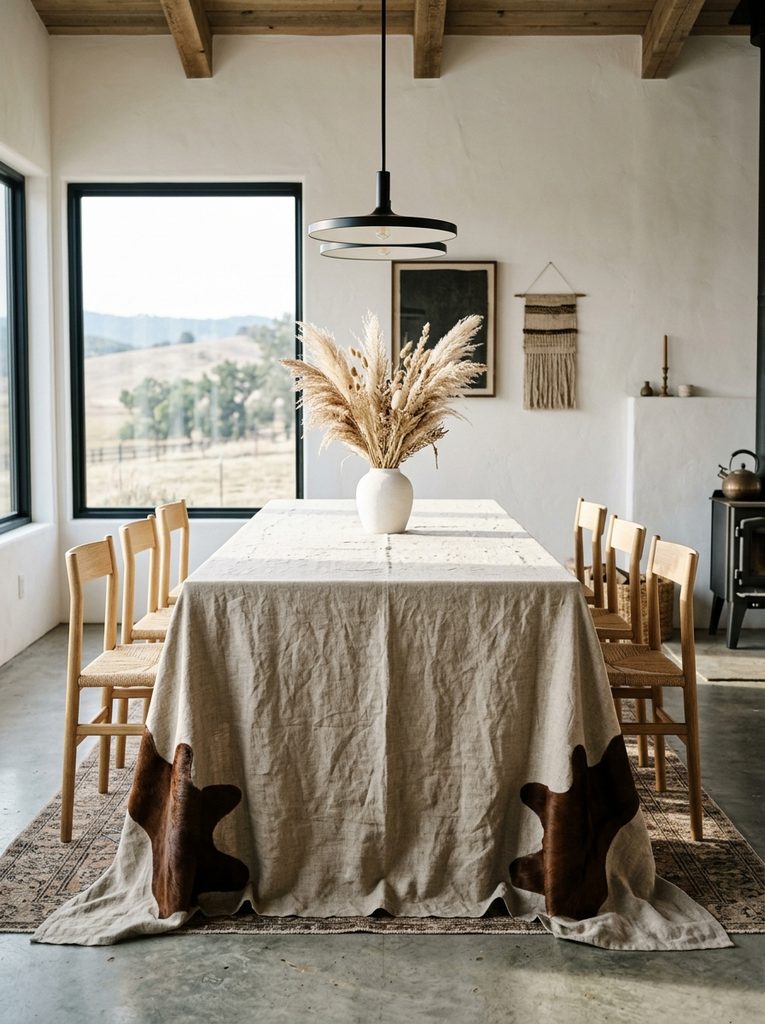
Idea 7: Cowhide Stamped Linen Dining Drape
Execution Process
Achieve high-impact contemporary ranch style by applying irregular, organic animal-pattern stamps across neutral, heavy-drape flax linen. Cut pure natural flax linen cloth with generous drops that gently pool two centimeters onto the floor at each corner for an upscale, relaxed silhouette. Form stamp matrices by cutting three distinct, organically shaped patches out of high-density upholstery foam to replicate natural cowhide markings. Dip the foam shapes lightly into water-thinned espresso-brown fabric paint, pressing the shapes in loose, asymmetric clusters primarily around the table drops while keeping the center top relatively sparse for place settings. Feather the damp paint edges lightly using a dry bristle fan brush to simulate the soft, tapered hair borders found on authentic hides. Once dry, press the linen under a damp press cloth to fix the pigments, creating a sophisticated textile drape that complements contemporary ranch decor and minimalist table settings.

Idea 8: Hand-Dyed Desert Sage Gauze Runner
Step-by-Step Guide
Introduce soft desert vegetation tones into your gathering by hand-dyeing lightweight cheesecloth to layer over crisp cream table covers. Procure grade ninety pure cotton cheesecloth yardage measuring roughly three times your table length to allow for organic, billowy folds. Prepare an immersion dye bath using warm water, common salt, and a muted sage-green liquid fiber dye, agitating the mixture thoroughly to ensure uniform saturation. Submerge the damp cheesecloth into the dye bath for twenty minutes, stirring continuously before rinsing the textile under cold running water until the runoff is clear. Squeeze the excess water out without twisting, then scrunch the wet fabric into a tight vertical rope to air-dry, locking in a soft crinkled texture that requires no pressing. Lay this fluid, dusty-green runner down the center of an ivory cotton cloth, weaving it loosely around brass candleholders, natural pine cones, and miniature terra cotta succulent pots.

Idea 9: Split-Rail Wood Grain Printed Tablecover
How to Make
Incorporate weathered architectural textures onto indoor banquet tables through custom relief printing that replicates sun-bleached barn wood grain. Select inexpensive light-gray cotton sheeting or durable unbleached muslin cut to standard rectangular event table proportions. Locate a piece of weathered, rough-sawn pine lumber exhibiting prominent, raised winter-growth wood grain lines, ensuring the wood is clean and free of loose dirt. Apply a thin, even coat of water-based black block-printing ink across the raised grain surfaces using a hard rubber brayer. Carefully press the inverted timber plank down onto sections of the stretched fabric, rolling a clean brayer over the reverse side of the board to transfer the timber impression. Repeat the stamping process in continuous parallel bands across the entire fabric face to produce a trompe l’oeil weathered plank appearance. This durable, washable textile creates an authentic boardwalk backdrop for rustic dining without the structural weight of real lumber.

Idea 10: Ruffled Calico Prairie Border Drape
Setup Method
Evoke Victorian frontier dining charm by finishing an unadorned cotton canvas dropcloth with a vibrant ruffled calico border. Cut a foundation table drape from bleached white cotton drill cloth, cutting the fabric so the raw edge hangs twenty centimeters below the table edge. Cut two-meter-long strips of yellow, tan, or blue floral calico cotton print measuring fifteen centimeters wide, piecing them end-to-end to equal double the outer perimeter measurement of the base table cloth. Run a loose gathering baste stitch five millimeters from the top edge of the calico strip, pulling the bobbin threads to create dense, even ruffles across the strip length. Pin the gathered calico ruffle right sides facing along the bottom edge of the white canvas drape, securing the seam with a sturdy five-millimeter straight stitch before pressing the seam upward. This charming border detail frames banquet tables with delicate prairie texture, working exceptionally well for bridal showers, milestone birthdays, and outdoor teas.

Common Beginner Mistakes and How to Avoid Them
Novice planners frequently make critical errors when sizing tablecloth yardage, resulting in awkward proportions that undermine the event aesthetic. A standard error is purchasing fabric based solely on surface length without factoring in drop depths, leaving bare table legs exposed. Always add twice the required drop measurement to both length and width dimensions before cutting raw yardage. Another regular pitfall involves using raw burlap directly from the supplier without proper preparation; untreated burlap sheds loose vegetable fibers and carries a strong natural oil aroma that can spoil dining appetites. Remedy this by airing burlap outdoors in shaded breezes for forty-eight hours and misting the weave with water before pressing. Finally, failing to secure outdoor linens against environmental winds creates immediate disruptions. Avoid relying solely on heavy centerpieces; instead, install discrete, low-profile table linen clips or hidden adhesive hook-and-loop tabs underneath perimeter edges to lock fabrics firmly in place.
Practical Tips for Better Results
Achieving professional, editorial-quality table presentations requires careful fabric maintenance, proper pressing, and structured textile layering. Always wash, pre-shrink, and press natural cotton fabrics before applying decorative stencils, as post-assembly shrinkage will distort hand-painted designs. When distressing raw linen or denim edges to create fringed borders, use a tailor’s rotary ruler and rotary cutter to establish a perfectly square cut along true grain lines first, ensuring your pulled-thread fringes remain even and neat. Prevent dark textile paints and stains from bleeding through porous weaves onto your tables by working over a layer of coated butcher paper or a reusable plastic dropcloth. To soften stiff cotton canvas drops into flowing drapes, wash the fabric twice with a half cup of baking soda followed by a vinegar rinse cycle. This simple mechanical wash cycle relaxes rigid manufacturing starches, giving inexpensive cotton canvas an aged, luxurious drape that falls naturally around dining chairs.
Styling, Presentation, or Organization Ideas
Organizing table settings around intentional visual zones elevates rustic textiles from simple table covers to balanced dining environments. Establish visual interest by using the three-tier layering formula: start with a wide, floor-length neutral base cloth, layer an eye-catching textured runner down the middle, and top with contrasting woven placemats at each individual seat. Keep runners narrow—ideally occupying no more than one-third of the total table width—to ensure seated guests have plenty of room for plates, flatware, and drinking glasses. Frame the table perimeter by alternating complementary textile napkins, such as folded red gingham napkins placed atop bleached canvas settings, to tie disparate focal colors across the space. When dressing elevated buffet lines, use inverted wooden crates placed under the base tablecloth to form stable, varying elevation platforms. Draping your textiles fluidly over these internal risers creates clean visual pathways that guide guests smoothly through meal stations.
Budget or Time Planning
Executing cohesive tabletop decor across multiple dining stations requires structured time management and calculated bulk material procurement. Reduce initial supply expenses by purchasing standard utility cotton canvas dropcloths from home hardware stores, which provide heavy, durable yardage at roughly half the cost of premium linen per square meter. Purchase burlap, jute cord, and bandana yardage from wholesale textile distributors rather than retail craft stores to benefit from bulk pricing tiers. Establish a four-week production timeline to keep assembly orderly and stress-free. Dedicate the first week to measuring banquet spaces, ordering bulk textiles, and calculating cutting layouts. Spend the second week laundering, pre-shrinking, and cutting all primary table panels to size. Use the third week to finish hems, apply stencils or wax treatments, and cure textile pigments. Reserve the final week exclusively for steam-pressing, rolling finished linens around cardboard tubes to prevent transport creases, and packing setup kits.
Creative Expansion and Advanced Inspiration
Experienced makers can elevate classic western table decor by integrating refined architectural details and mixed-media accents into textile fabrications. Upgrade standard cotton runners by embedding hammered metal studs or miniature copper rivets along the border hems, pairing the industrial hardware against soft unbleached linen. Incorporate traditional leathercraft by tooling geometric floral corner guards from vegetable-tanned leather remnants, mounting them directly onto the corners of heavy waxed canvas banquet cloths. For high-end evening receptions, experiment with integrating subtle, ultra-low-voltage micro LED copper wire strands underneath translucent dyed cheesecloth runners, casting a soft, warm glow that illuminates raw wood centerpieces and vintage tableware from below. You can also personalize individual table settings by burning custom table numbers directly into crosscut cedar wood slices, securing each slice to the cloth using stitched rawhide cords. These advanced mixed-media executions deliver an elevated, sophisticated interpretation of frontier hospitality.
Frequently Asked Questions
Which tablecloth fabrics are easiest to clean after an outdoor western party? Heavyweight unbleached cotton dropcloth canvas and paraffin-waxed duck canvas offer the best balance of durability, stain resistance, and simple machine washability for outdoor settings.
How do you remove the natural scent from newly purchased burlap tablecloths? Unroll the burlap outdoors in a covered, well-ventilated area for two days, sprinkle baking soda across the surface for four hours, and shake the fabric thoroughly to neutralize residual processing oils.
What is the best drop length for seated party dining tables? A drop length of twenty-five to thirty centimeters from the tabletop edge provides a balanced visual drape while preventing excess fabric from bunching into the laps of seated guests.
How can I stop lightweight outdoor runners from blowing off banquet tables? Fasten flat, adhesive-backed magnetic weights inside the end hems of the runners, or anchor the fabric across table edges using broad, heavy leather utility ties clamped underneath the tabletop.


