10 Apartment Aesthetic Bedroom Cozy Ideas

Apartment bedroom design focuses on creating a comfortable personal space within limited square footage while maintaining visual balance, functionality, and aesthetic consistency. Pinterest ideas for apartment bedrooms emphasize cozy styling, warm textures, and practical organization methods that transform compact rooms into visually appealing and highly livable environments. This topic is especially relevant for renters and small-space living because it relies on decoration, layout planning, and simple DIY improvements rather than structural renovation. Warm lighting, layered textiles, and minimalist furniture arrangements play a central role in shaping the overall atmosphere.
This article explores how to build a cozy apartment bedroom using structured design principles and realistic execution methods. Readers will learn how to combine modern design, minimalist style, and functional organization to improve comfort and visual harmony. Each section explains practical techniques including material selection, layout planning, texture layering, lighting strategies, and decorative composition. The focus remains on actionable steps that support beginner friendly implementation without requiring advanced skills or expensive materials. The goal is to create inspiration that can be applied directly to real apartment bedrooms while maintaining clarity, consistency, and strong visual identity.
Why Apartment Cozy Bedroom Ideas Are Trending or Useful
Apartment cozy bedroom design continues to grow in popularity because it solves common challenges in small-space living. Limited square footage requires efficient use of layout, storage, and decoration without overcrowding the room. Pinterest ideas in this category focus on practical home decor solutions that improve comfort while maintaining a clean and modern appearance. Warm-toned interiors, soft lighting, and layered textures help reduce visual emptiness and create a calming environment suitable for rest and relaxation.
This style is also widely accessible for beginners because it does not require structural renovation or advanced tools. Simple changes such as adjusting bedding layers, adding curtains, improving lighting, or reorganizing furniture can significantly improve the overall atmosphere. DIY approaches allow renters and homeowners to personalize their space without permanent modifications. The combination of aesthetic inspiration and functional organization makes this trend highly adaptable across different apartment types. It also supports minimalist style principles by emphasizing intentional decoration, efficient storage, and balanced composition rather than excessive furnishings.
Materials and Preparation
Preparing for an apartment bedroom transformation begins with selecting materials that support both comfort and visual cohesion. Common materials include neutral bedding sets, textured blankets, soft rugs, lightweight curtains, warm lighting fixtures, wooden furniture pieces, storage baskets, and simple wall decoration elements. These materials help establish a consistent warm-toned aesthetic that aligns with modern Pinterest inspiration. Natural fabrics such as cotton and linen are especially effective for creating softness and layering depth within compact spaces.
Tools for setup typically include measuring tape, adhesive hooks, basic wall mounting equipment, scissors, and organization containers. Preparation starts with evaluating room layout, identifying unused corners, and analyzing lighting sources. Decluttering is essential before introducing new decorative elements because it allows better spatial clarity. Planning should include selecting a color palette consisting of two or three warm neutral tones to ensure visual consistency. A simple floor plan sketch helps guide furniture placement and prevents overcrowding. Proper preparation ensures that every design choice contributes to a functional and visually balanced apartment bedroom environment.
MAIN IDEAS SECTION
Idea 1: Layered Neutral Bedding for Compact Apartment Bedrooms
How to Create
Layered bedding is a foundational approach for achieving a cozy apartment bedroom aesthetic because the bed functions as the primary visual anchor in small spaces. Neutral tones such as beige, cream, warm white, and soft sand create a calm base that enhances spatial perception and reduces visual clutter. Adding layered textures introduces depth without overwhelming the room. Linen sheets, cotton duvet covers, knitted throws, and soft woven cushions contribute to a balanced composition that aligns with modern Pinterest ideas and minimalist style principles. The combination of warm tones and varied textures produces a comfortable environment suitable for compact living conditions.
In apartment settings, bedding layering also plays a functional role by adapting to seasonal comfort needs. Lightweight fabrics support breathability in warmer months, while thicker knitted layers provide warmth during colder periods. Visual balance is achieved by mixing smooth and textured surfaces while maintaining a consistent color palette. Decorative pillows should remain limited in number to preserve functionality and prevent overcrowding. A folded throw placed at the foot of the bed helps structure the composition and adds visual softness.
To create this setup, begin by selecting a neutral bedding base that matches the room’s lighting conditions. Layer one textured blanket across the middle section of the bed to introduce depth. Add two or three accent cushions in slightly varied warm tones to create subtle contrast. Avoid excessive decoration that disrupts visual clarity. A small rug placed beneath the bed can enhance grounding and improve spatial definition. Proper arrangement ensures the bed becomes a cohesive focal point that enhances the overall apartment bedroom aesthetic while maintaining practicality and beginner friendly execution.
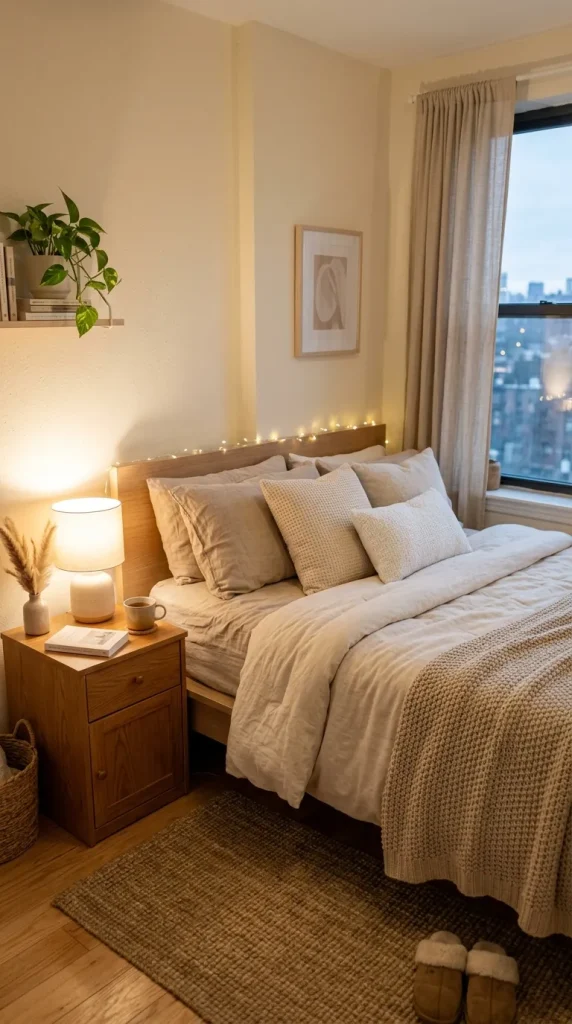
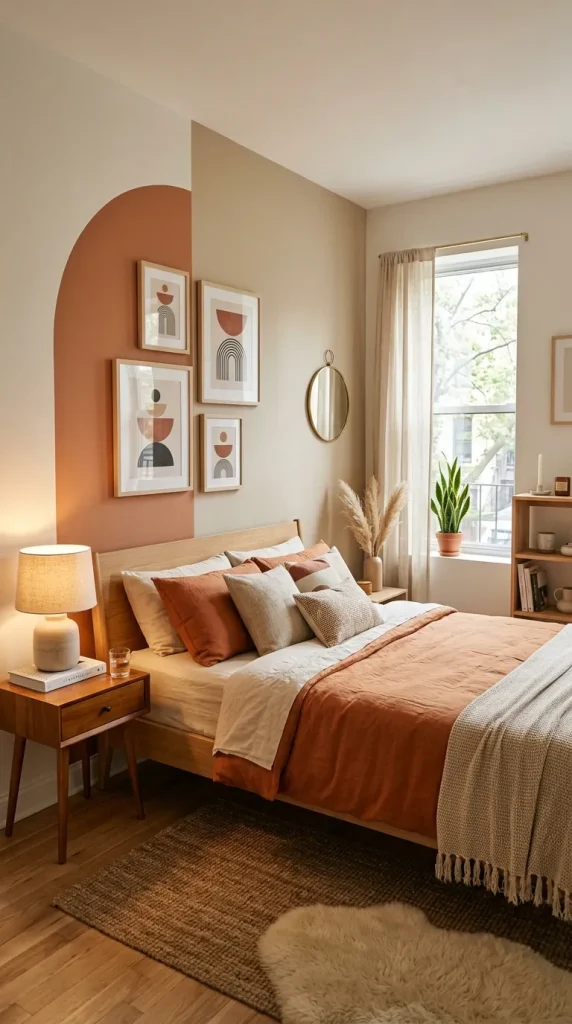
Idea 2: Warm Wall Color Blocking for Apartment Bedrooms
How to Create
Wall color blocking introduces structured visual interest into apartment bedrooms by dividing surfaces into balanced sections of warm-toned color. This technique uses two or more complementary shades such as terracotta, beige, clay, or muted brown to create depth without overwhelming compact spaces. Pinterest ideas frequently highlight color blocking because it adds architectural definition while remaining simple enough for DIY application. In apartment bedrooms, this method improves spatial perception by visually expanding or balancing wall proportions.
The effectiveness of color blocking lies in controlled contrast rather than intensity. Soft transitions between warm tones help maintain a calm atmosphere while still introducing visual structure. This technique works well behind the bed area, where a partial wall color change creates a natural focal point. It also pairs effectively with minimalist furniture and neutral bedding because it enhances background depth without introducing clutter. Matte finishes are commonly used because they reduce reflection and support a softer aesthetic.
To implement this design, begin by selecting two complementary warm tones that align with the existing room palette. Measure wall sections carefully and mark boundaries using painter’s tape to ensure clean edges. Apply the lighter base tone first, followed by the accent section once dry. Maintain straight lines to preserve visual clarity. Furniture should be positioned to complement the color divisions rather than obstruct them. The result is a structured yet cozy apartment bedroom environment that reflects modern design principles and supports beginner friendly DIY execution.
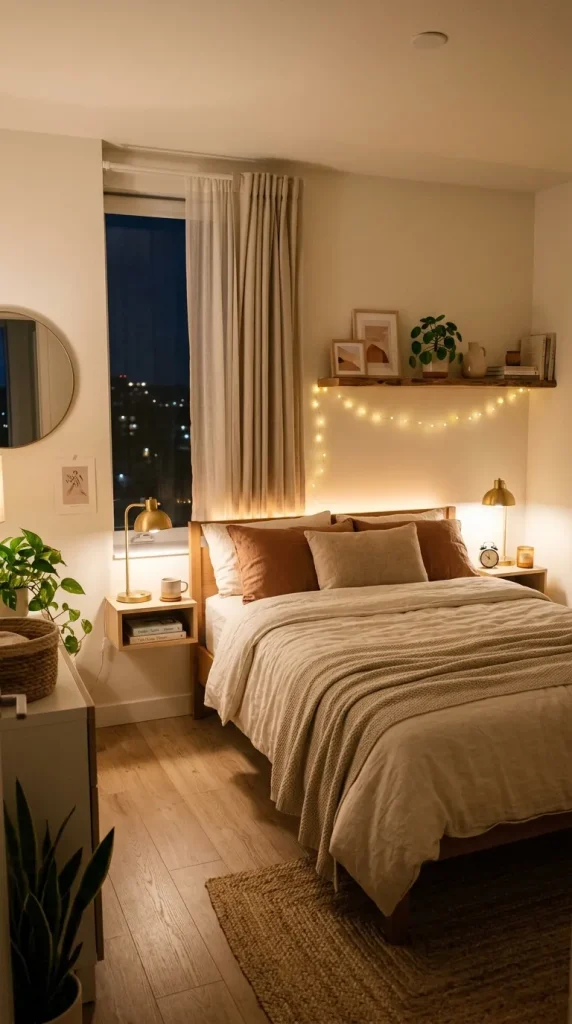
Idea 3: Soft Ambient Lighting Layers for Cozy Atmosphere
How to Create
Lighting plays a central role in shaping apartment bedroom comfort because it directly influences mood, depth perception, and color warmth. Soft ambient lighting replaces harsh overhead illumination with layered light sources that distribute warmth evenly across the room. Pinterest inspiration often emphasizes warm lighting because it enhances earthy tones and creates a calming environment suitable for relaxation. In compact apartment bedrooms, lighting design also helps define zones without physical separation.
Layered lighting typically includes bedside lamps, indirect LED lighting, string lights, and diffused ceiling fixtures. Each light source serves a specific purpose, contributing to overall balance. Warm white bulbs are preferred because they soften shadows and improve the appearance of textured materials. Fabric lampshades and wooden fixtures further enhance warmth by diffusing brightness. This combination creates depth and prevents the room from feeling flat or overly bright.
To create this lighting setup, begin by replacing cool-toned bulbs with warm alternatives. Position bedside lamps at equal height to maintain symmetry and visual order. Add indirect lighting behind headboards or shelves using removable adhesive systems to avoid permanent changes in rental spaces. Avoid relying solely on a single light source, as this reduces atmosphere quality. Instead, distribute lighting across multiple points to achieve balanced illumination. The final result is a cozy apartment bedroom environment that supports relaxation, enhances decoration, and aligns with modern minimalist design principles.
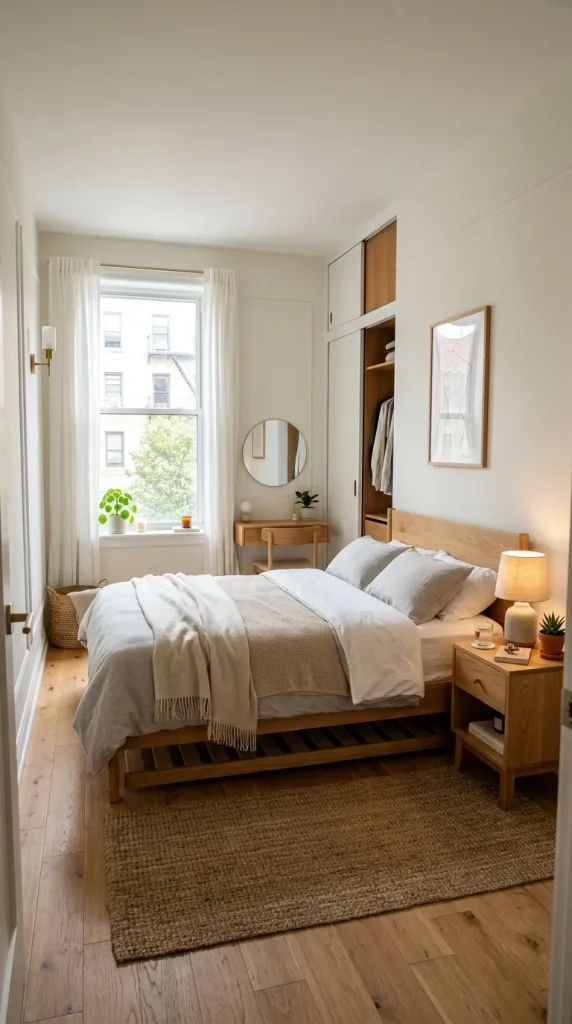
Idea 4: Space-Saving Minimalist Furniture Layout
How to Create
Minimalist furniture layout is essential in apartment bedrooms where space optimization determines both comfort and functionality. This approach focuses on selecting essential furniture pieces and arranging them to maximize open floor space. Pinterest ideas often highlight minimalist layouts because they improve movement flow while maintaining aesthetic clarity. Neutral-toned furniture with simple geometric shapes supports a cohesive visual structure that aligns with modern design principles.
Furniture selection should prioritize multifunctional pieces such as storage beds, compact nightstands, and lightweight shelving units. These elements reduce clutter while maintaining practical storage capacity. The arrangement should allow natural light to move freely across the room, preventing visual heaviness. Maintaining clear walking paths and balanced spacing between furniture items contributes to a more organized and breathable environment. Warm wood tones or neutral finishes help reinforce a cozy atmosphere without adding visual complexity.
To implement this layout, begin by identifying essential furniture pieces and removing unnecessary items. Position the bed as the central anchor point and arrange supporting furniture symmetrically where possible. Avoid blocking windows or light sources. Use vertical space for storage to free up floor area. Keep decoration minimal to maintain clarity. The result is a structured apartment bedroom that feels spacious, functional, and aligned with minimalist style principles while remaining accessible for beginner friendly organization and DIY improvement.
Idea 5: Cozy Textile Layering for Visual Warmth
How to Create
Textile layering introduces softness and warmth into apartment bedrooms by combining different fabric types, textures, and weights. This approach enhances visual comfort while supporting a cozy aesthetic inspired by Pinterest ideas. Textiles such as woven blankets, cotton throws, linen cushions, and soft rugs create depth and tactile variation. In small apartment bedrooms, textile layering is especially effective because it improves atmosphere without requiring additional furniture or structural changes.
The principle of textile layering focuses on controlled variation. Combining smooth and textured fabrics prevents monotony while maintaining a cohesive warm-toned palette. Neutral colors such as beige, cream, and muted brown ensure consistency across different materials. Layering also supports seasonal adaptation, allowing lighter fabrics in warmer months and heavier textures in colder seasons. This flexibility makes textile layering both practical and aesthetically valuable.
To create this effect, begin by selecting a base fabric such as neutral bedding or a soft rug. Add secondary layers including textured blankets and accent cushions. Maintain balance by limiting color variations and focusing on material contrast instead. Avoid excessive layering that reduces usability or creates clutter. Arrange textiles intentionally so each layer remains visible and functional. The result is a visually warm apartment bedroom that feels comfortable, structured, and aligned with modern minimalist design trends.
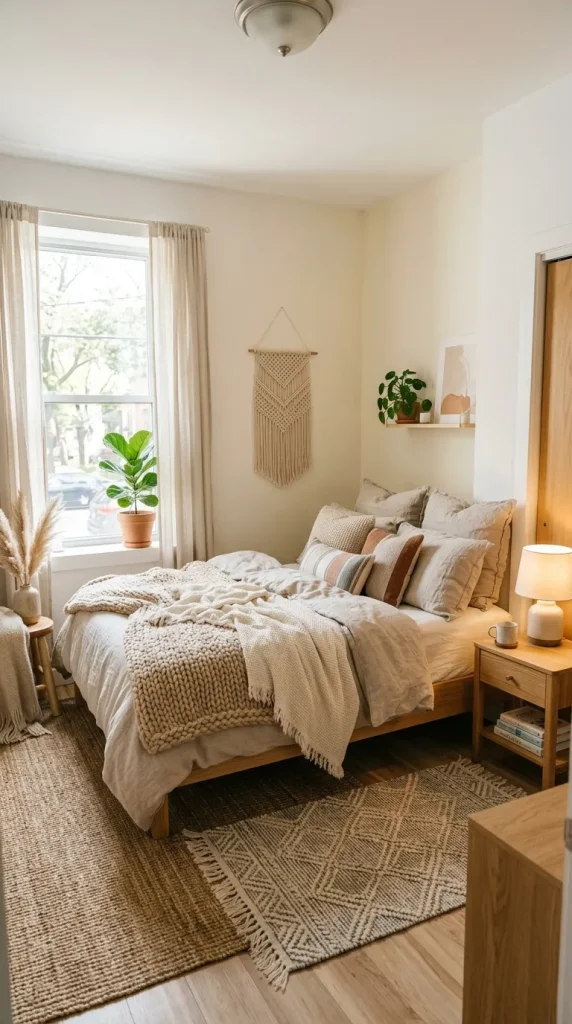
Idea 6: Compact Reading Nook for Apartment Bedrooms
How to Create
A compact reading nook adds functionality and comfort to apartment bedrooms by transforming unused corners into purposeful relaxation spaces. Pinterest ideas frequently showcase reading corners because they increase usability without requiring significant space. Warm-toned decor, soft seating, and controlled lighting contribute to a cozy atmosphere that complements the main sleeping area. This design approach enhances both aesthetic value and functional living within small apartments.
Reading corners typically include a chair or floor cushion, a small side table, and soft lighting. Textiles such as blankets and cushions improve comfort while maintaining visual cohesion with the rest of the bedroom. Shelving or storage baskets can be added for books and accessories, ensuring organization remains consistent. Warm lighting enhances the space by creating a focused yet relaxing environment suitable for reading or quiet activities.
To create this setup, identify an underused corner near natural light if possible. Place seating first, then layer textiles for comfort and warmth. Add a small table for functionality and introduce soft lighting to define the area visually. Keep decoration minimal to avoid overcrowding. Maintain a consistent warm-toned palette to ensure integration with the rest of the bedroom. The result is a practical and cozy apartment bedroom feature that improves both lifestyle functionality and aesthetic appeal.
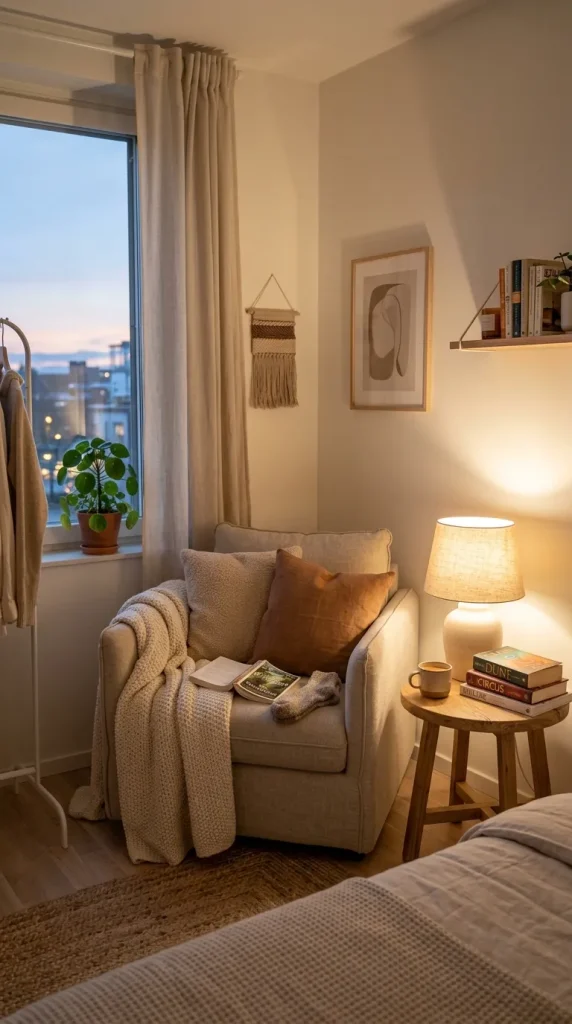
Idea 7: Neutral Curtain Layers for Soft Light Control
How to Create
Curtain layering improves apartment bedroom comfort by controlling natural light while enhancing visual softness. Neutral curtains in beige, cream, and warm white tones filter sunlight gently and contribute to a calm atmosphere. Pinterest ideas often emphasize layered curtains because they provide both functional shading and decorative texture. In apartment bedrooms, this method also helps create a sense of height and openness.
Layered curtains typically combine sheer fabrics with thicker outer panels. Sheer layers diffuse daylight while maintaining brightness, while heavier curtains provide privacy and warmth during evening hours. Fabric movement adds softness to the room and complements minimalist furniture arrangements. Neutral tones ensure consistency with warm-toned interior design while avoiding visual distraction. This combination creates a balanced environment suitable for compact living spaces.
To implement this setup, measure windows accurately and install curtain rods slightly above frame level to enhance vertical perception. Choose lightweight sheer fabric for the inner layer and neutral heavier fabric for the outer layer. Ensure even draping on both sides for visual balance. Avoid overly bold patterns to maintain calm aesthetics. The final result is a softly illuminated apartment bedroom that feels spacious, warm, and aligned with modern minimalist design principles.
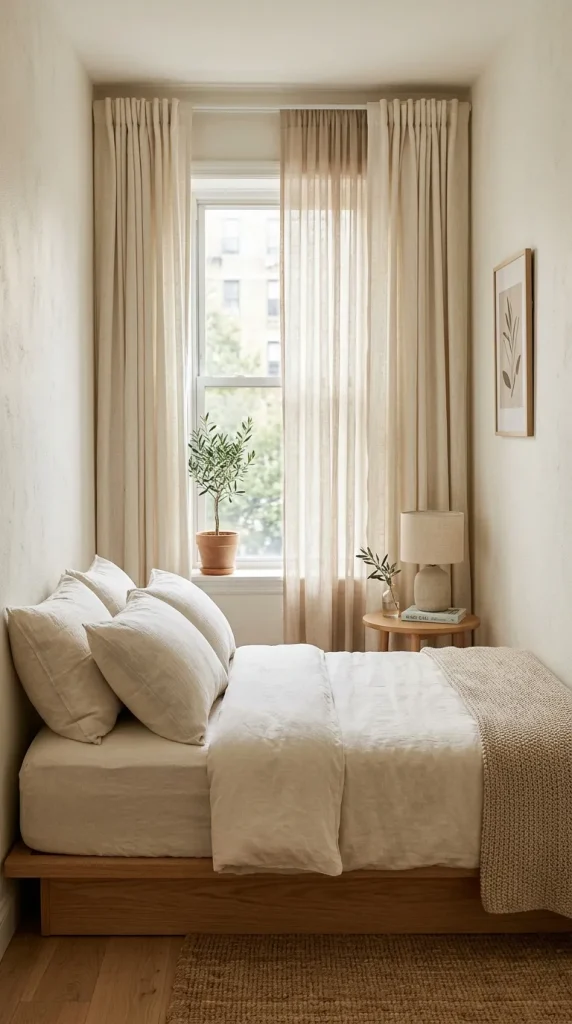
Idea 8: Open Shelving for Organized Apartment Storage
How to Create
Open shelving provides both storage and decoration in apartment bedrooms by utilizing vertical wall space efficiently. Pinterest ideas highlight shelving systems because they combine organization with aesthetic presentation. In small bedrooms, this method reduces floor clutter while allowing curated display of personal items. Warm wood shelves paired with neutral decor create a cohesive and balanced appearance.
Open shelving works best when items are arranged intentionally. Books, baskets, ceramic decor, and small plants can be displayed without overcrowding. Maintaining negative space between objects prevents visual clutter and supports minimalist style principles. Warm-toned materials enhance overall bedroom cohesion while contributing to a cozy aesthetic. Shelving also allows flexible updates without structural changes.
To create this system, install floating shelves at measured intervals for balanced spacing. Arrange items by size and texture rather than random placement. Store smaller items in baskets to maintain organization. Limit decorative objects to essential pieces to preserve clarity. Keep color tones consistent with the overall room palette. The result is a structured and visually appealing apartment bedroom that combines organization and decoration in a practical and beginner friendly format.
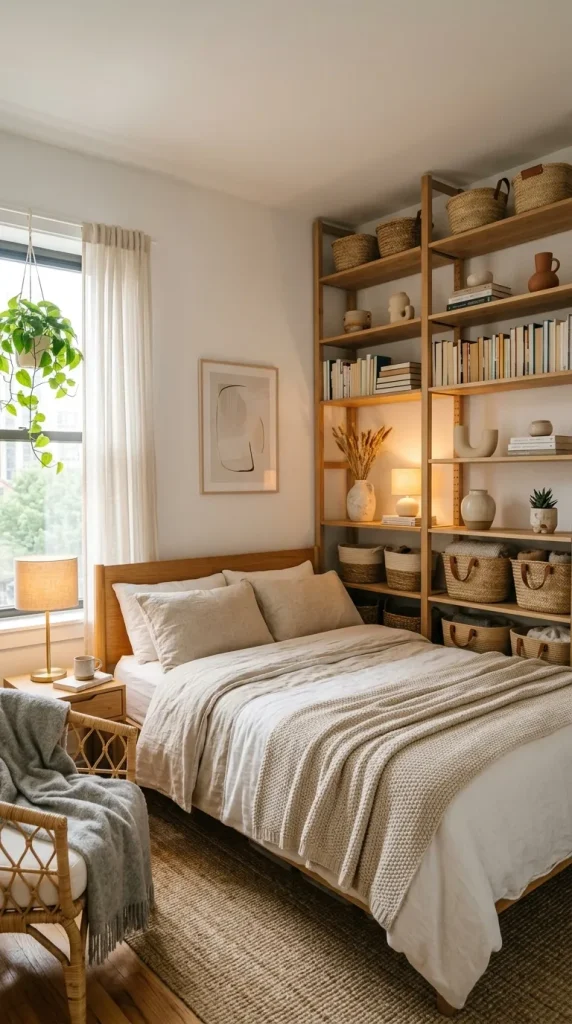
Idea 9: Warm Floor Layering With Rugs and Textures
How to Create
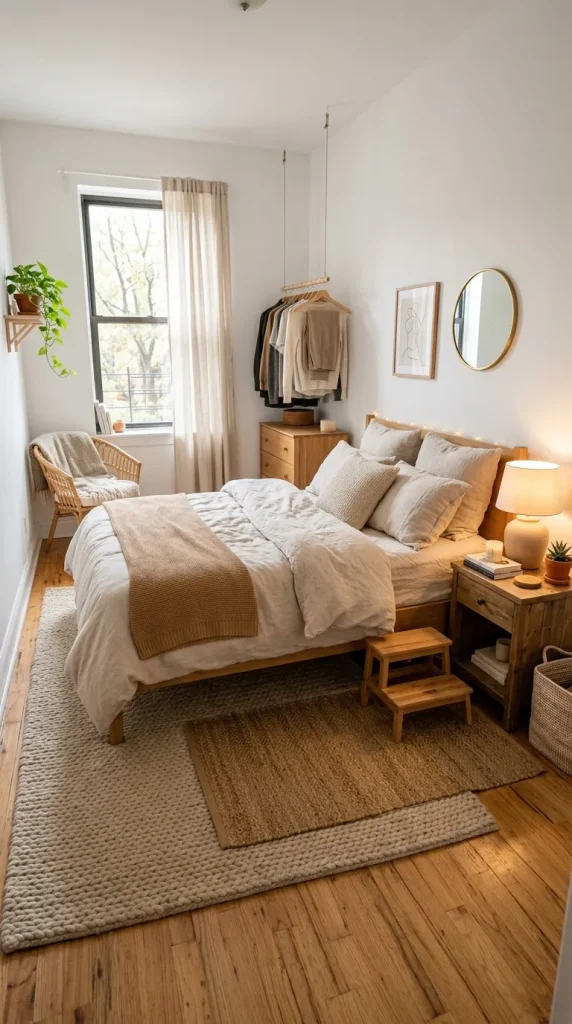
Floor layering improves apartment bedroom comfort by adding warmth, texture, and visual grounding. Rugs define spatial zones and reduce empty floor areas, making compact rooms feel more complete. Pinterest ideas often emphasize layered rugs because they enhance depth and create aesthetic balance without requiring structural changes. Warm tones such as beige, camel, and muted rust support cohesive interior styling.
Layering different rug sizes introduces dimension while maintaining softness. A large base rug anchors the room, while smaller accent rugs define specific areas such as bedside zones or seating corners. Texture variation adds visual interest without disrupting color harmony. This method improves both comfort and acoustic softness within apartment bedrooms.
To implement this design, measure floor space and select appropriately sized rugs. Position the largest rug beneath the bed and layer smaller pieces strategically. Ensure consistent color tones across all rugs to maintain cohesion. Avoid overly bold patterns that disrupt visual calmness. The result is a warm and grounded apartment bedroom environment that feels comfortable, structured, and aligned with modern minimalist design trends.
Idea 10: Soft Canopy Styling for Apartment Beds
How to Create
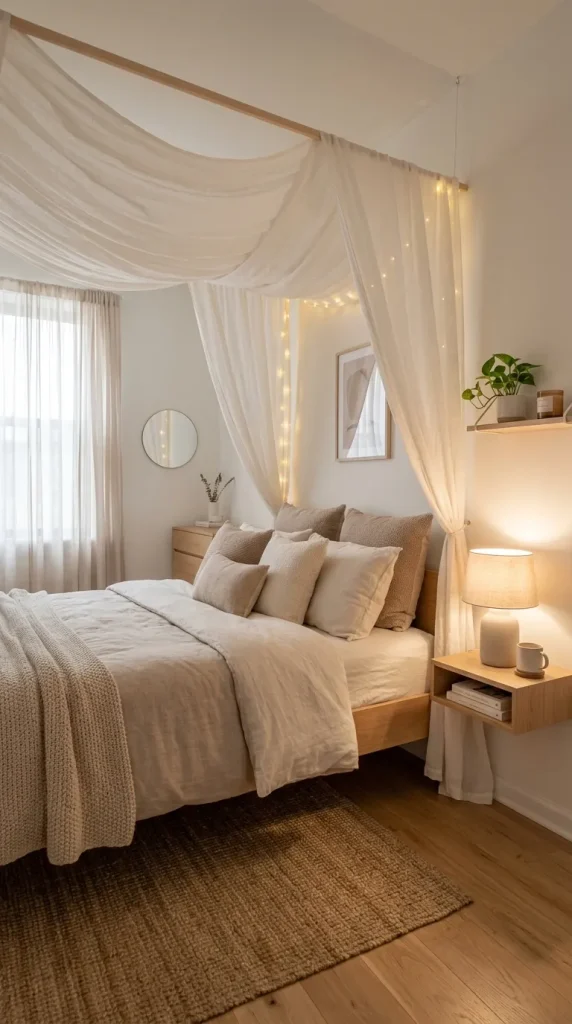
Canopy styling introduces softness and vertical elegance into apartment bedrooms by framing the bed with lightweight fabric. Pinterest ideas highlight canopy designs because they create a cozy enclosed atmosphere without requiring heavy furniture. Neutral fabrics such as cream or beige enhance warmth while maintaining visual lightness suitable for small spaces.
Canopies work by suspending fabric from ceiling points or lightweight frames. Flowing material softens lighting and creates a calming focal point around the bed. This design adds privacy and enhances visual structure within compact apartments. When combined with warm lighting and neutral bedding, canopy styling strengthens the cozy aesthetic significantly.
To create this setup, install secure ceiling hooks or lightweight rods above the bed. Hang fabric evenly to ensure balanced draping on all sides. Avoid heavy materials that reduce airflow or create cluttered visuals. Maintain consistency with bedding and surrounding decor to preserve cohesion. The final result is a soft, elegant apartment bedroom that feels warm, structured, and aligned with minimalist design principles while remaining beginner friendly and practical.
Common Beginner Mistakes and How to Avoid Them
A common mistake in apartment bedroom design is overcrowding the space with excessive furniture or decoration. Limited square footage requires intentional selection of items that support both function and aesthetics. Another frequent issue is inconsistent color usage, which disrupts visual harmony and reduces the calming effect of warm-toned interiors. Maintaining a controlled palette ensures coherence across all elements. Poor lighting selection is also a significant problem, as harsh lighting reduces warmth and makes textures appear flat. Using layered warm lighting improves depth and atmosphere.
Practical Tips for Better Results
Effective apartment bedroom design depends on balance between functionality and aesthetics. Prioritize lighting, textiles, and layout before introducing decorative elements. Maintain consistency in material choices such as wood, linen, and cotton to strengthen cohesion. Use vertical space for storage to maximize floor area. Keep decoration minimal and intentional to preserve clarity. Planning each section of the room before setup ensures smoother execution and more professional results.
Styling, Presentation, or Organization Ideas
Styling should focus on simplicity and controlled layering. Arrange furniture to support open movement flow while maintaining visual balance. Use textiles to add softness without overwhelming the room. Organize surfaces using baskets, shelves, and hidden storage systems. Maintain consistent spacing between decorative items to avoid clutter. Lighting should be distributed across multiple points to create warmth and depth. The overall presentation should remain calm, structured, and aligned with modern minimalist design principles.
Budget or Time Planning
Apartment bedroom improvements can be completed gradually to manage cost and effort. Begin with high-impact changes such as lighting and bedding before moving to decorative or structural updates. Reusing existing furniture reduces budget requirements while maintaining functionality. Planning purchases in stages prevents unnecessary spending. Time management should prioritize layout setup first, followed by decoration and styling. Breaking tasks into phases ensures more organized execution and sustainable progress.
Creative Expansion and Advanced Inspiration
Advanced apartment bedroom design can include custom furniture modifications, handmade decor elements, and mixed material styling. Experimenting with layered textures such as wood, fabric, and ceramic enhances visual depth. Seasonal updates can refresh the room without major redesign. Integrated storage solutions improve functionality while maintaining aesthetics. Gradual refinement of lighting systems and decorative layering allows continuous improvement while preserving the original warm-toned minimalist concept.