10 Mud Kitchen Ideas
Mud kitchens have become a strong focus in outdoor learning and creative play spaces, especially within modern Pinterest ideas that highlight hands-on and sensory activities for children. A mud kitchen is a simple outdoor setup where kids can mix soil, water, sand, leaves, and natural elements to create imaginative cooking experiences. This concept supports creativity, problem-solving, and independent play while connecting children with nature in a practical way. In many DIY home decor and backyard organization inspirations, mud kitchens are now seen as an essential part of a child-friendly outdoor environment.
This article explores 10 mud kitchen ideas designed to help you understand how to plan, build, and style different versions based on available space, materials, and budget. Each idea focuses on practical execution and beginner friendly approaches so that anyone can create a functional setup without complex tools. You will learn how different designs work, what materials are commonly used, and how to adapt each idea into your own space. Whether you are looking for a minimalist style or a more detailed creative project, these concepts provide structured inspiration for building an engaging outdoor play area.
Why This Idea Is Trending or Useful
Mud kitchen setups have gained popularity across Pinterest ideas because they combine creativity, education, and outdoor activity in one simple DIY concept. In modern parenting and home design trends, there is a growing focus on reducing screen time and encouraging sensory play. Mud kitchens support this by allowing children to engage in hands-on exploration using natural materials. They also promote independence, coordination, and imagination without requiring expensive equipment or complex installation.
Another reason this idea is trending is its flexibility. A mud kitchen can be built using recycled materials, budget-friendly items, or repurposed furniture, making it accessible for almost any household. This aligns with minimalist style and sustainable living practices that are widely shared in creative home decor communities. The concept also fits well into backyard organization ideas, where outdoor spaces are transformed into functional learning zones. Because of its adaptability, the mud kitchen has become a popular creative project for families looking for easy project solutions that combine fun, learning, and practical design in one setup.
Materials and Preparation
Before starting a mud kitchen DIY project, it is important to gather suitable materials that support durability and safe play. Common materials include wooden pallets, old tables, crates, plastic containers, buckets, and stainless steel or aluminum bowls. Natural elements such as stones, sand, soil, leaves, and water sources are essential for the sensory experience. Many Pinterest ideas also suggest using recycled household items like spoons, ladles, and pots to enhance realism. The goal is to create a functional space that mimics a real kitchen environment in an outdoor setting.
Preparation involves selecting a stable outdoor location such as a garden corner, backyard wall, or shaded area. The surface should be level to ensure safety during play. Planning the layout is also important, including deciding where storage areas, play surfaces, and washing zones will be placed. Weather resistance should be considered when choosing materials, especially for wooden structures. Applying a protective coating can help extend durability. Organizing all materials beforehand ensures a smoother DIY tutorial process and reduces interruptions during construction.
Idea 1: Wooden Pallet Mud Kitchen Setup
How to Create
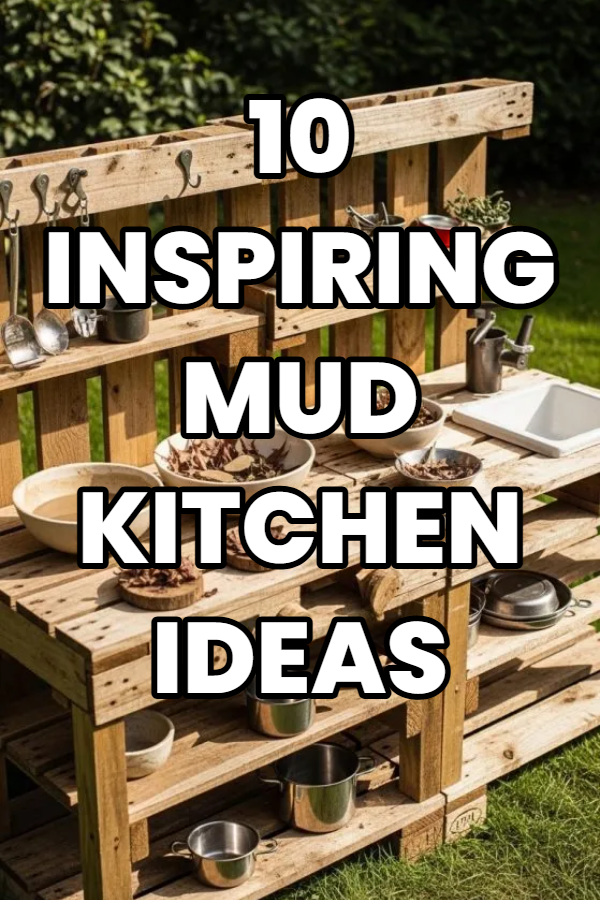
A wooden pallet mud kitchen is one of the most popular DIY approaches because it uses readily available materials and supports a rustic, natural aesthetic. This design focuses on transforming simple pallets into a functional outdoor cooking station. The structure typically includes a base counter, shelves for storage, and hooks for hanging utensils. The appeal of this idea lies in its simplicity and adaptability, making it suitable for beginner friendly projects. It fits well into modern design trends where recycled materials are used to create practical home decor solutions. The open structure also encourages creativity, as children can easily access different sections of the kitchen and interact with natural materials freely.
To create this setup, start by selecting sturdy wooden pallets and sanding them to remove rough edges. Arrange them vertically to form a base and secure them together using nails or screws. Add a flat wooden surface on top to serve as a cooking counter. Install smaller pallet sections as shelves for storing pots, bowls, and natural ingredients like stones or leaves. You can also attach hooks for hanging tools such as ladles or small buckets. Position the structure in a shaded outdoor area and ensure it is stable before use. This step by step method allows for a durable and functional mud kitchen that aligns with budget ideas and sustainable DIY practices.
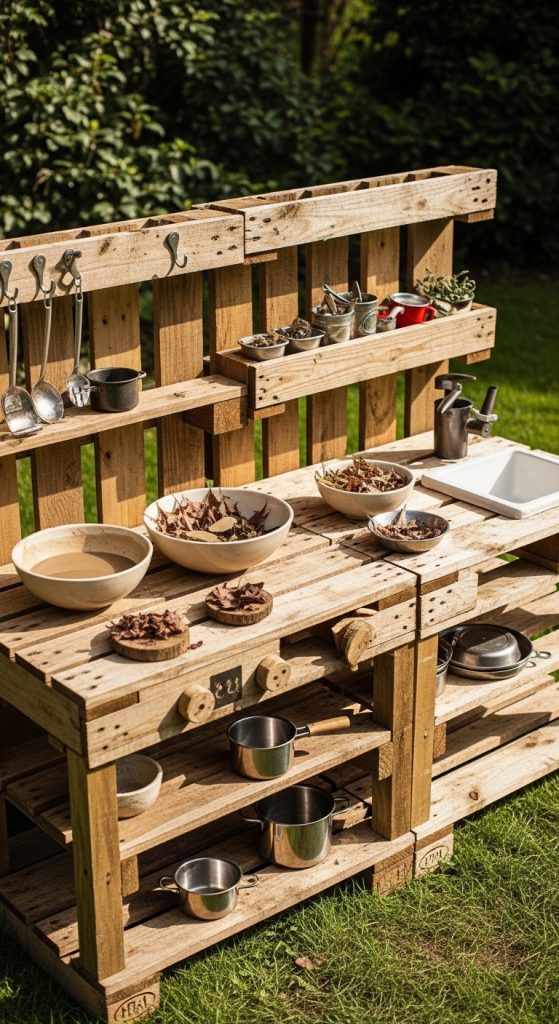
Idea 2: Stone and Brick Outdoor Mud Kitchen
How to Create
A stone and brick mud kitchen design focuses on durability and long-term outdoor use. This concept is ideal for families looking for a more permanent structure in their backyard. The use of natural stone or bricks creates a strong foundation and adds a modern yet rustic visual appeal. This idea is often featured in Pinterest ideas related to minimalist style outdoor organization because it blends naturally with garden environments. The structure typically includes a fixed counter, built-in compartments, and designated areas for mixing and washing. It provides a stable environment for creative play while maintaining a clean and structured appearance.
To build this setup, begin by selecting a suitable outdoor location with level ground. Arrange bricks or stones to form a rectangular base and secure them using safe outdoor adhesive or cement if needed. Create a flat surface for the main cooking area using a large stone slab or wooden board placed securely on top. Add small compartments using additional bricks to separate different play zones. Incorporate bowls or containers into the structure for water and soil mixing. This execution process ensures a long-lasting mud kitchen that requires minimal maintenance while offering a realistic outdoor cooking experience for children.
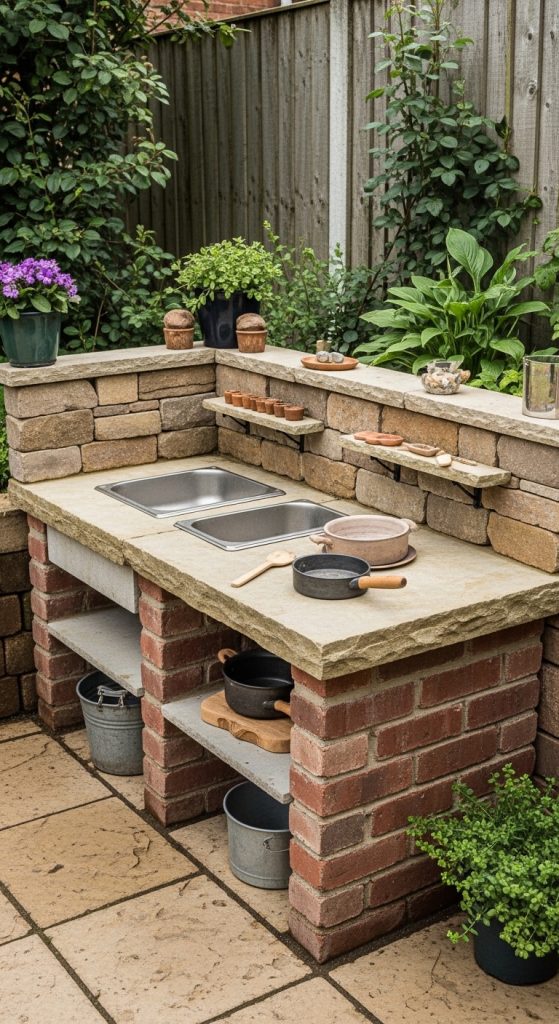
Idea 3: Repurposed Table Mud Kitchen Station
How to Create
A repurposed table mud kitchen transforms an old table into a functional outdoor play station. This idea is highly practical and aligns with sustainable DIY concepts where existing furniture is reused instead of discarded. It is suitable for small spaces and works well in compact gardens or patios. The design focuses on simplicity while still providing multiple play zones for mixing, pouring, and organizing natural materials. This type of setup is often highlighted in creative project inspirations because it requires minimal modification but delivers strong functional results.
To create this setup, start with an old table that has a stable structure. Clean and sand the surface to remove dirt and rough edges. Divide the table into sections using small containers, trays, or cut-out spaces. Add bowls or sinks for water play and designate one area for soil and sand mixing. You can attach small shelves underneath for storage of tools and natural items. Position the table outdoors in a shaded area to prevent excessive weather damage. This step by step tutorial approach makes it an easy project suitable for beginners who want quick and effective outdoor play solutions.
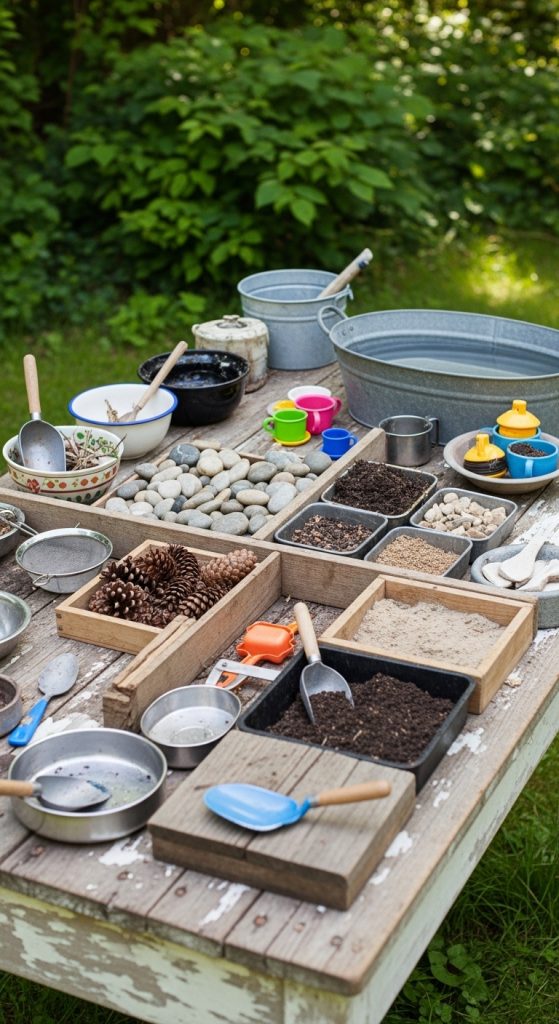
Idea 4: Crate-Based Modular Mud Kitchen
How to Create
A crate-based modular mud kitchen offers flexibility and adaptability through stackable wooden or plastic crates. This design allows users to adjust the structure based on available space and changing needs. It is particularly useful for families who prefer temporary or movable outdoor setups. The modular nature supports creativity and organization, making it a popular choice in modern Pinterest ideas focused on flexible home decor and outdoor learning environments. Each crate can serve a different function such as storage, cooking surface, or ingredient station.
To create this setup, gather several sturdy crates and arrange them in a stable formation. Stack them vertically or horizontally depending on the desired layout. Secure the crates together to prevent movement during use. Place a flat board or wooden surface on top to create a cooking area. Assign individual crates for specific purposes such as storing utensils, holding water containers, or collecting natural materials. This setup process is simple and highly customizable, making it ideal for beginner friendly DIY projects that require minimal tools and planning.
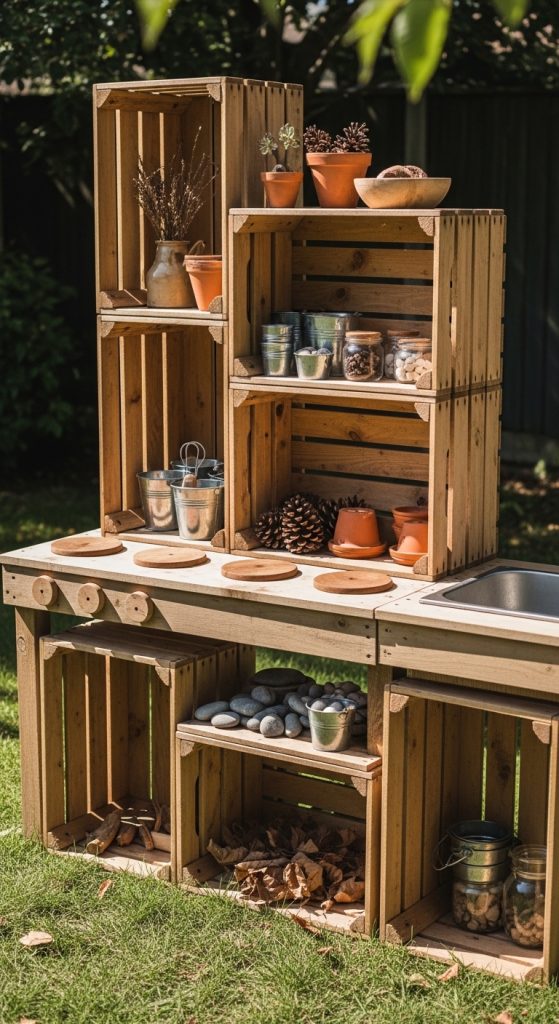
Idea 5: Wall-Mounted Mud Kitchen Design
How to Create
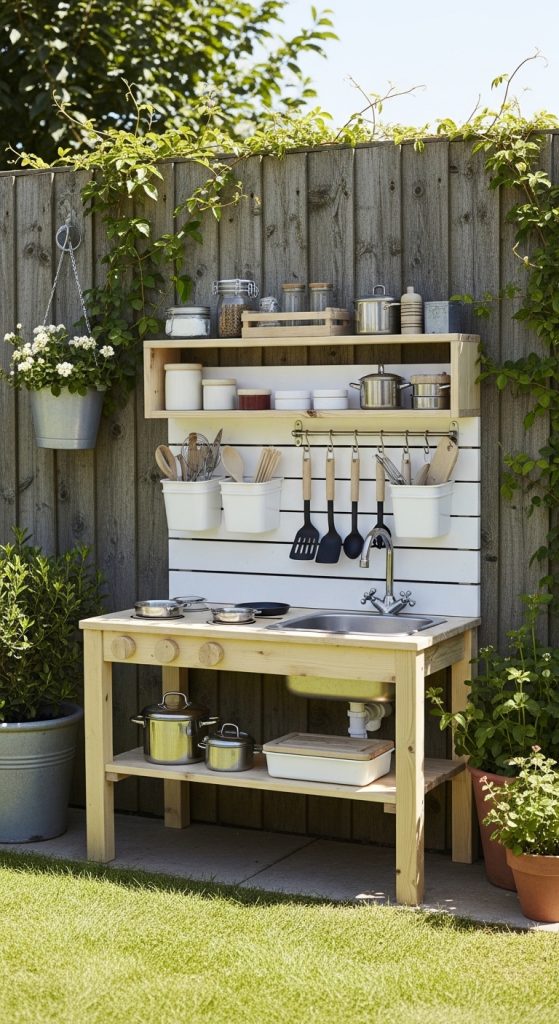
A wall-mounted mud kitchen is an efficient space-saving design that attaches directly to an outdoor wall or fence. This concept is ideal for small gardens or compact outdoor areas where floor space is limited. The design focuses on vertical organization, allowing all cooking and play elements to be arranged on a single wall surface. It fits well into minimalist style and modern outdoor organization trends, offering a clean and structured appearance while still supporting creative play activities.
To create this setup, start by selecting a sturdy wall or wooden fence. Install a base shelf at a comfortable height for children. Add hooks, small shelves, and mounted containers to hold utensils and materials. Attach a small basin or bowl area for water play. Use weather-resistant materials to ensure durability. Organize the layout so that each section has a clear function, such as mixing, storing, or washing. This step by step method creates a compact yet functional mud kitchen suitable for efficient backyard planning.
Idea 6: Wheelbarrow Mud Kitchen Concept
How to Create
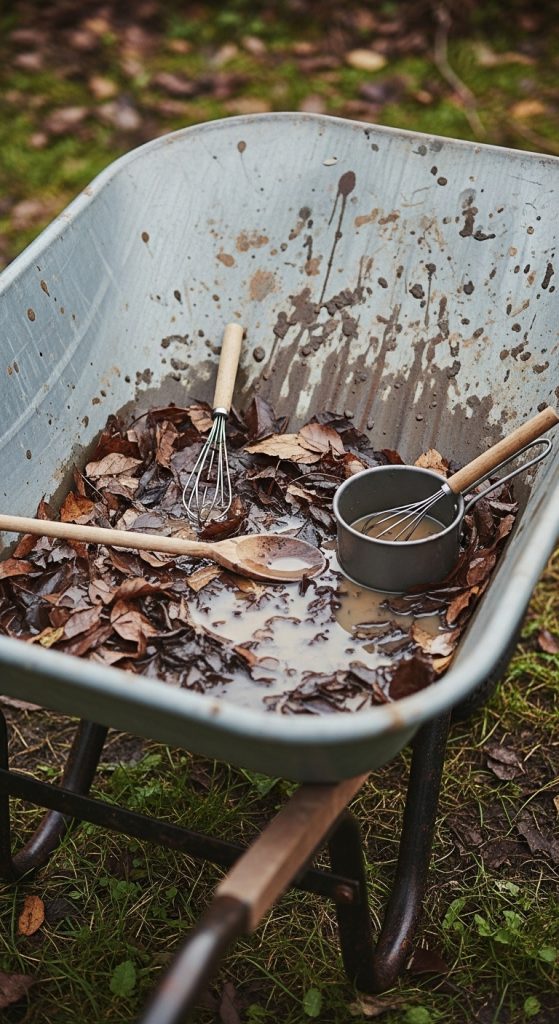
A wheelbarrow mud kitchen is a mobile and creative design that uses a wheelbarrow as the main structure. This idea is highly flexible and allows children to move their play station around different areas of the garden. It is often included in DIY tutorials because it requires minimal modification and uses a commonly available tool. The design supports outdoor exploration and encourages dynamic play experiences.
To create this setup, clean an old wheelbarrow thoroughly and ensure it is stable. Divide the interior into sections using small containers or dividers. Add tools such as spoons, cups, and natural materials for mixing activities. You can also attach small holders on the handle for hanging accessories. Place the wheelbarrow on a flat surface during use to ensure safety. This easy project is ideal for budget ideas and flexible outdoor play setups.
Idea 7: Multi-Level Wooden Mud Kitchen
How to Create
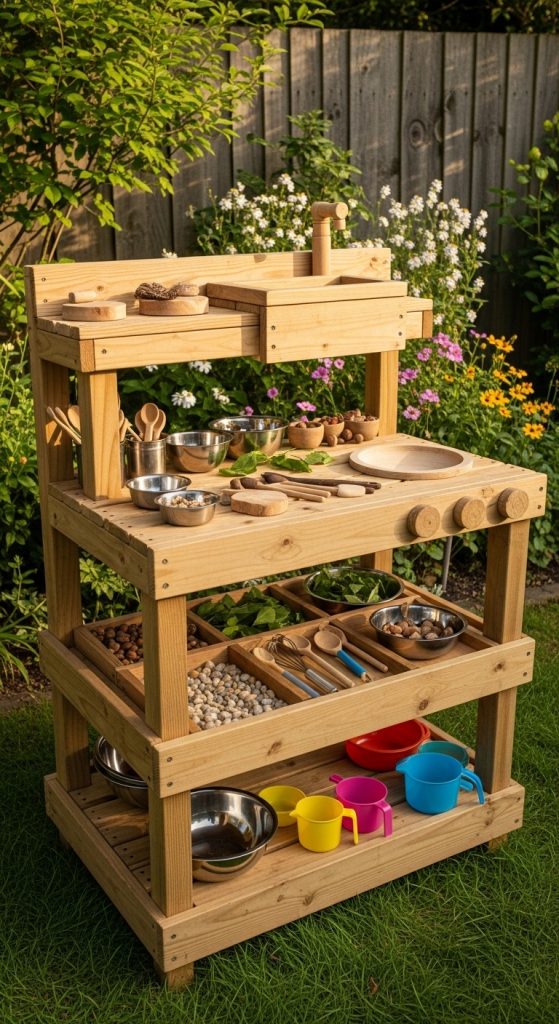
A multi-level wooden mud kitchen introduces vertical layers to increase play space and organization. This design is suitable for larger outdoor areas and supports more complex creative activities. It is often featured in modern design inspirations due to its structured layout and visually appealing arrangement. The multiple levels allow children to separate cooking, storage, and washing activities efficiently.
To build this setup, construct a wooden frame with two or three levels using strong planks. Secure each level firmly and ensure stability. Assign each level a specific function such as preparation, mixing, and storage. Add containers, bowls, and natural materials to each section. This structured approach creates a highly organized mud kitchen suitable for advanced DIY planning.
Idea 8: Tire-Based Mud Kitchen Setup
How to Create
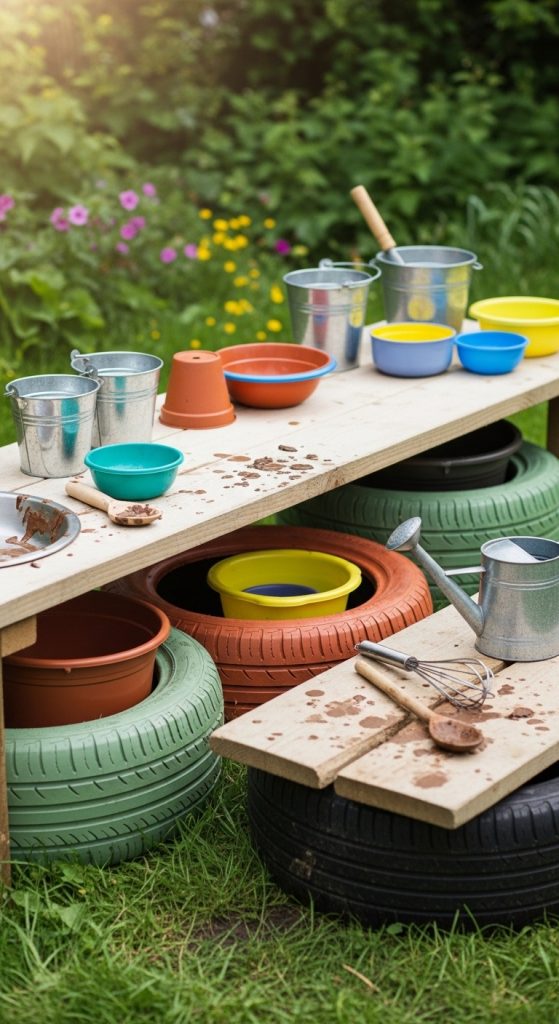
A tire-based mud kitchen uses recycled tires as the foundation for a creative outdoor play structure. This idea supports sustainability and aligns with eco-friendly DIY concepts. It is commonly used in backyard organization projects where repurposed materials are encouraged. The circular shape of tires adds uniqueness to the design.
To create this setup, clean old tires and arrange them in a stable formation. Place wooden boards or flat surfaces on top to create working areas. Use inner spaces for storage or mixing stations. Secure all components to ensure safety. This method is simple and highly durable.
Idea 9: Portable Bucket Mud Kitchen
How to Create
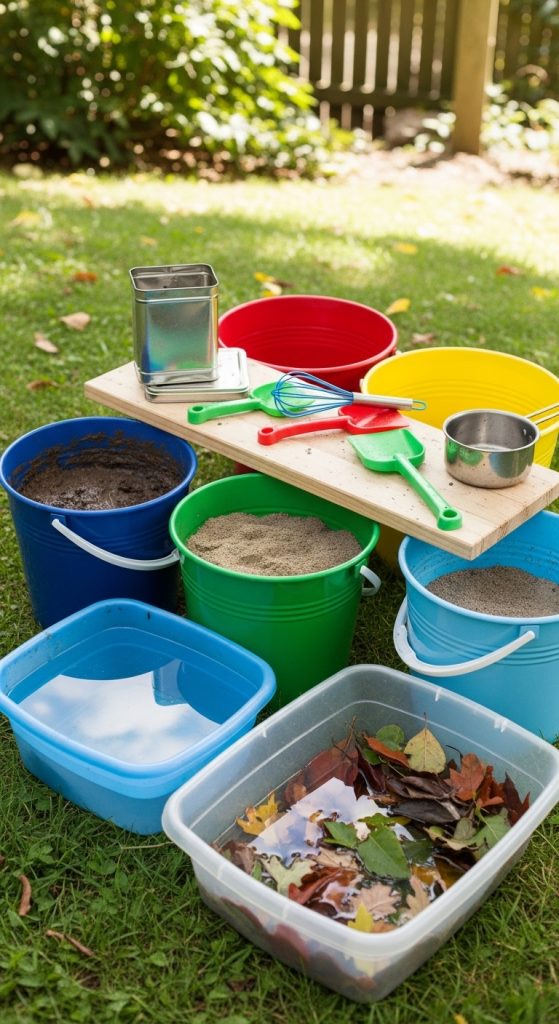
A portable bucket mud kitchen focuses on mobility and simplicity. This design uses buckets and containers as the main components, making it ideal for small spaces or temporary setups. It is often featured in beginner friendly DIY tutorials due to its ease of assembly.
Arrange buckets of different sizes and assign them specific functions such as mixing, storing, or washing. Place them on a flat surface or inside a crate for stability. This flexible approach allows easy rearrangement.
Idea 10: Natural Landscape Mud Kitchen
How to Create
A natural landscape mud kitchen integrates directly into outdoor environments using existing elements like soil, rocks, and plants. This design requires minimal construction and focuses on blending with nature. It is ideal for open garden spaces.
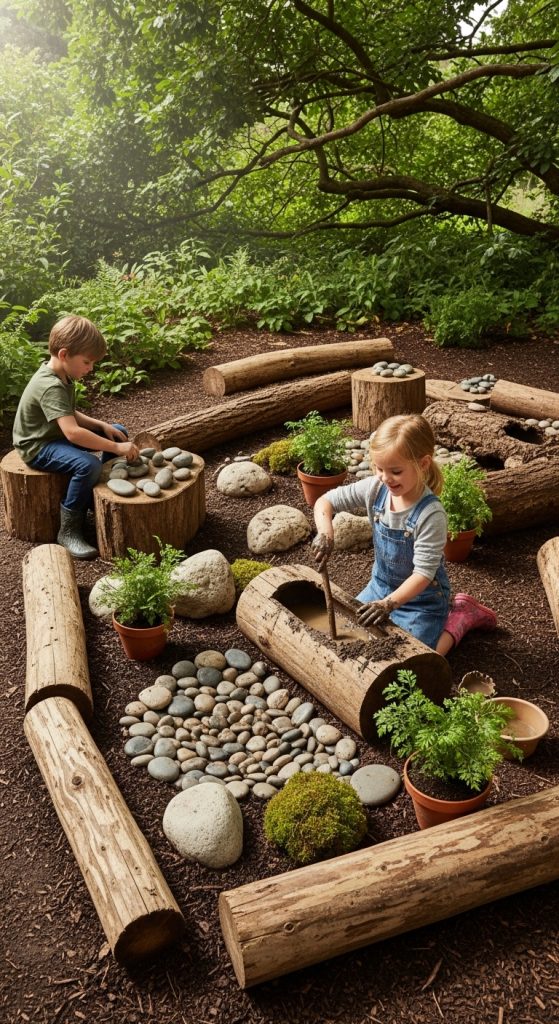
Use natural boundaries to define play areas. Add stones, logs, and natural materials for functional zones. This approach creates an immersive outdoor learning experience.
Common Beginner Mistakes and How to Avoid Them
A common mistake in mud kitchen DIY projects is poor material selection, which can reduce durability. Another issue is lack of planning, leading to disorganized layouts. Safety is often overlooked, especially with unstable structures. Avoid these mistakes by choosing strong materials, planning layouts carefully, and ensuring stability in all components.
Practical Tips for Better Results
Using weather-resistant materials improves durability. Organizing tools into clear sections enhances usability. Incorporating natural elements increases engagement. Regular maintenance ensures long-term functionality. Keeping the design simple improves accessibility for children.
Styling, Presentation, or Organization Ideas
Styling can follow minimalist style or rustic themes. Use natural colors and textures for a cohesive look. Organize tools in visible and accessible ways. Add labeled sections for better structure. Keep the design visually balanced.
Budget or Time Planning
Most mud kitchen projects can be completed using budget ideas with recycled materials. Simple setups take a few hours, while larger structures may require a day or two. Planning materials beforehand reduces delays and improves efficiency.
Creative Expansion and Advanced Inspiration
Advanced ideas include adding water systems, extended storage units, or themed cooking stations. Multi-zone outdoor learning areas can also be developed. Combining sensory play elements increases creativity and engagement.