
10 Corner Breakfast Nook Ideas
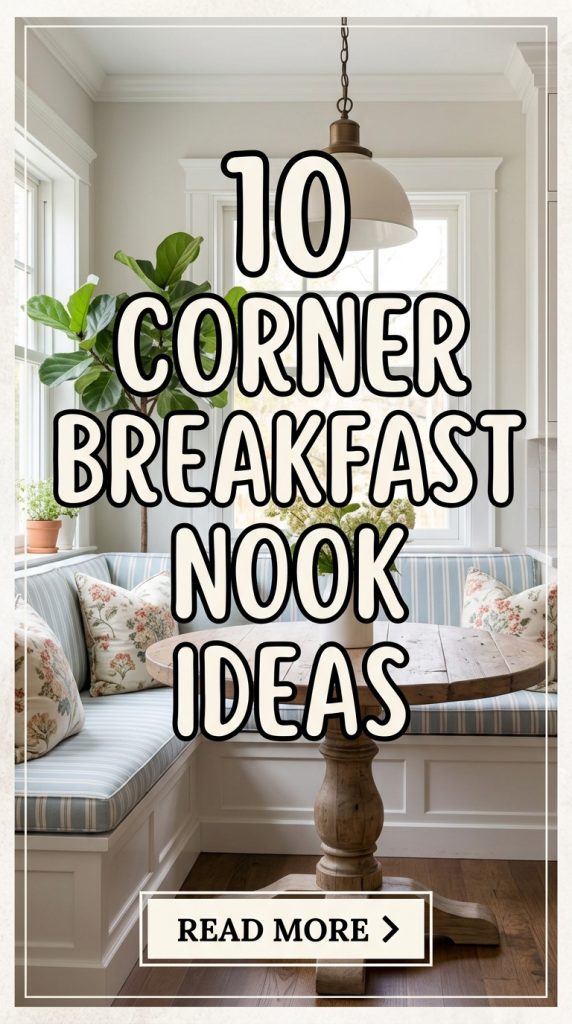
A corner breakfast nook is a practical and visually appealing way to transform unused kitchen or dining corners into functional seating areas. This concept is widely used in modern interior planning because it maximizes small spaces while creating a dedicated zone for meals, conversation, and daily routines. A well-designed nook can enhance both comfort and efficiency in a home layout, especially in compact apartments or open-plan kitchens. The idea focuses on combining seating, table arrangements, and storage in a compact footprint without compromising style or usability.
This article explores structured Pinterest ideas that help you design functional corner breakfast nooks using simple materials and clear planning methods. Each idea focuses on accessibility, beginner friendly execution, and modern design approaches. You will learn how to create aesthetic seating arrangements, choose suitable materials, and organize space efficiently. The goal is to provide practical inspiration for DIY home decor projects that improve both aesthetics and functionality.
Why This Idea Is Trending or Useful
Corner breakfast nooks are trending in interior design because they combine practicality with aesthetic value. Many modern homes prioritize multifunctional spaces, especially in smaller layouts where every corner must serve a purpose. A breakfast nook allows homeowners to create a cozy dining environment without requiring a separate dining room. This aligns with minimalist style preferences and budget ideas that focus on efficiency and clean organization.
Another reason for its popularity is the flexibility of design. These spaces can be customized using different seating types, materials, and layouts, making them suitable for various home styles. Whether it is modern design, rustic inspiration, or simple DIY home decor, corner nooks adapt easily. They also support creative project planning, allowing individuals to express personal style while maintaining functionality.
Materials and Preparation
Creating a corner breakfast nook requires basic planning and a few essential materials. The primary components include seating units such as benches or cushions, a table suitable for corner placement, and supportive elements like cushions or upholstery. Additional materials may include wood panels, foam padding, fabric covers, screws, brackets, and paint for finishing. The selection depends on whether the project is fully handmade or partially assembled using ready-made elements.
Preparation involves measuring the available corner space accurately and deciding on seating capacity. Planning ensures that movement flow remains smooth and comfortable. It is also important to define the style direction, such as minimalist style, modern design, or rustic inspiration. Proper preparation reduces errors during assembly and helps maintain a consistent aesthetic throughout the DIY tutorial process.
Idea 1: Minimalist L-Shaped Wooden Nook
How to Create
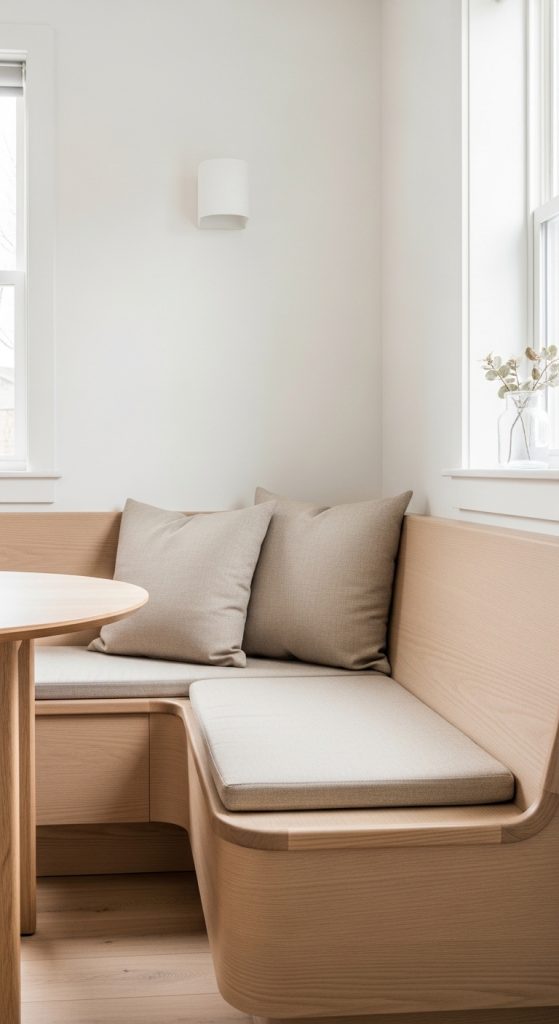
A minimalist L-shaped wooden nook focuses on clean structure and functional design. This idea uses straight lines and simple geometry to create a balanced seating arrangement that fits neatly into any corner. The design is ideal for modern homes that prioritize simplicity and uncluttered visual space. The seating is typically built using smooth wooden panels with neutral tones to maintain a calm and cohesive appearance. The table is placed centrally to support easy access from both sides of the L-shaped bench. This setup enhances usability while maintaining an open and breathable feel in the room.
To create this design, start by measuring the corner space and cutting wooden panels according to the dimensions. Assemble the base frame using strong brackets for stability. Add a flat seating surface and secure it properly to the frame. Apply a smooth finish to enhance durability and visual appeal. Add cushions in neutral tones to improve comfort without disrupting the minimalist style. This DIY project is beginner friendly and requires only basic woodworking tools, making it suitable for simple home decor improvement.
Idea 2: Built-In Bench with Storage Drawers
Step-by-Step Guide
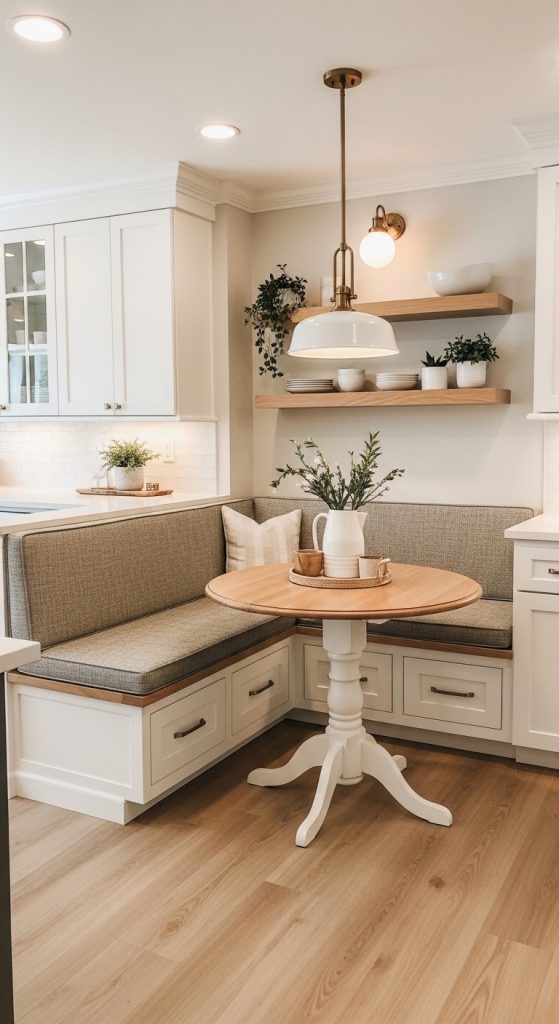
A built-in bench with storage drawers combines seating and organization in one functional unit. This design is ideal for small homes where efficient storage solutions are essential. The bench is constructed along the corner walls, creating a seamless integration with the room structure. The storage drawers beneath the seating provide space for kitchen items, linens, or daily essentials. This approach enhances both practicality and aesthetic organization, making it a popular Pinterest idea for compact living spaces.
To build this nook, construct a sturdy base frame aligned with the corner walls. Install sliding drawers or hinged compartments beneath the seating area. Ensure smooth operation by using proper drawer tracks and durable materials. Add a cushioned top layer for seating comfort. Finish the surface with paint or wood polish depending on the desired style. This project requires basic carpentry planning but remains beginner friendly when broken into clear steps.
Idea 3: Rustic Farmhouse Corner Seating
Execution Process
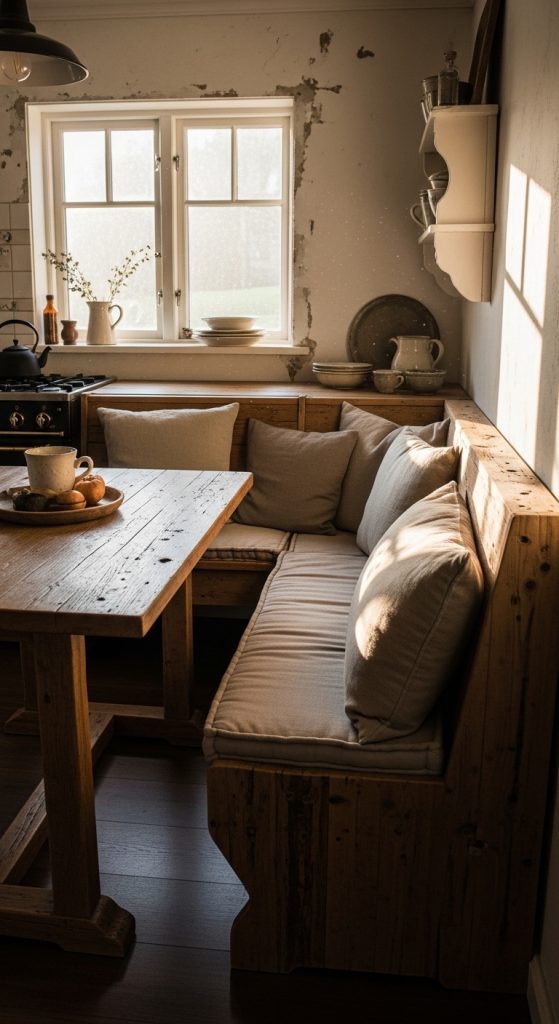
A rustic farmhouse corner seating design emphasizes natural textures and warm tones. It typically features wooden surfaces with visible grain patterns, creating a cozy and inviting atmosphere. This style works well in home decor inspired by traditional or countryside aesthetics. The seating often includes thick wooden benches paired with a sturdy central table, creating a grounded and homely environment. Soft cushions in earthy colors enhance comfort while maintaining the rustic theme.
To execute this idea, select reclaimed or textured wood materials for authenticity. Build an L-shaped bench frame and secure it firmly to the wall or floor. Sand the surface lightly to retain natural imperfections. Apply a protective coating without altering the natural look. Add fabric cushions or handmade textiles to complete the aesthetic. This DIY tutorial is highly suitable for beginners who prefer creative yet simple projects with natural materials.
Idea 4: Window-Facing Breakfast Corner
Setup Method
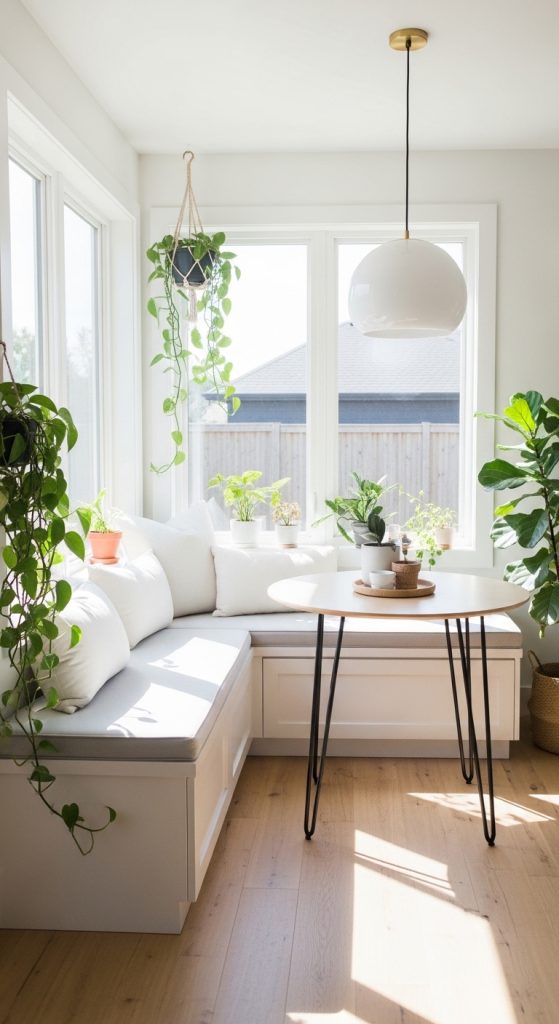
A window-facing breakfast corner maximizes natural light and creates a refreshing dining atmosphere. This design places the seating directly beside a window, allowing sunlight to enhance the visual appeal of the space. It is commonly used in modern design layouts where natural illumination is a key feature. The seating arrangement is typically simple, with lightweight benches and a compact table that does not obstruct the window view.
To set up this design, position a bench along the window wall and ensure it does not block airflow or lighting. Choose lightweight materials to maintain flexibility. Add soft cushions to enhance comfort during use. The table should be proportionate to the seating area to maintain balance. This idea is easy to implement and requires minimal materials, making it a beginner friendly DIY project focused on natural inspiration and aesthetic clarity.
Idea 5: Floating Bench with Wall Support
How to Make
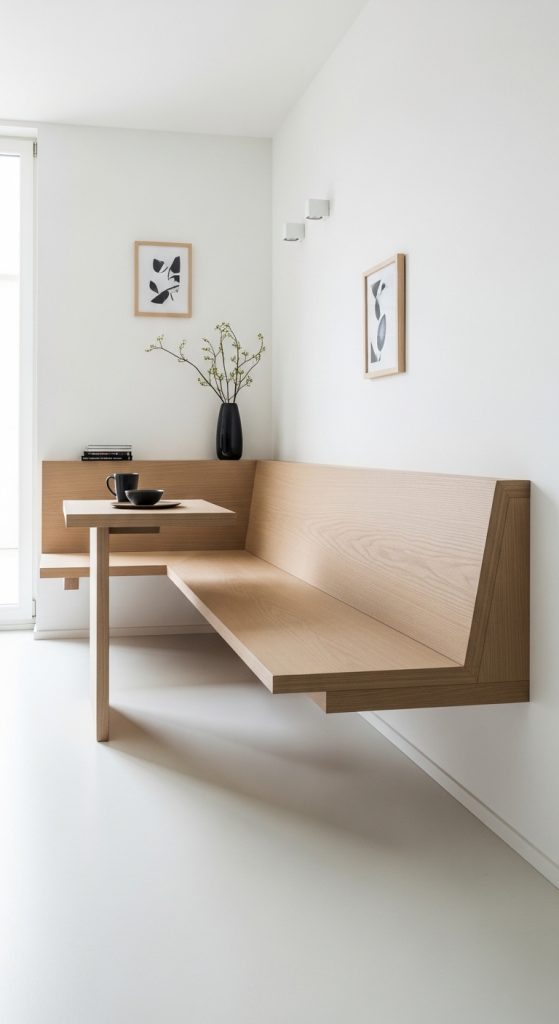
A floating bench design creates a modern and visually light breakfast nook. The seating appears suspended because it is supported by wall-mounted brackets rather than visible legs. This creates an open floor space effect, making the room feel larger and more organized. The design is ideal for minimalist style interiors where clean visual lines are important.
To construct this nook, install strong wall brackets capable of supporting weight. Attach a flat seating panel securely onto the brackets. Reinforce the structure with hidden supports if necessary. Add cushioning for comfort while maintaining a sleek appearance. This DIY approach requires careful measurement and secure installation but remains achievable for beginners with basic tools and planning.
Idea 6: Compact Round Table Corner Setup
How to Create
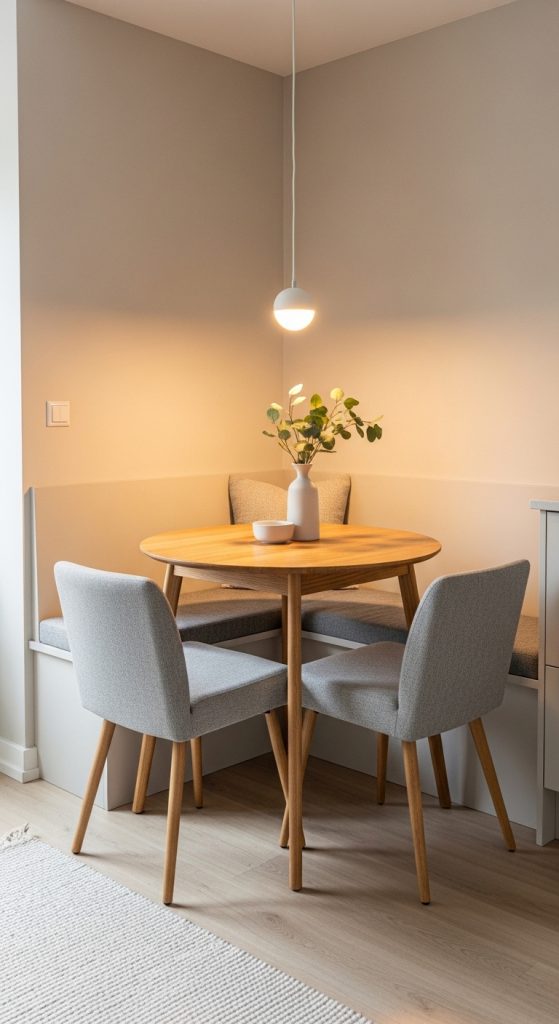
A compact round table setup focuses on soft geometry and efficient use of corner space. Unlike angular designs, the round table creates smooth movement flow and enhances visual harmony. This idea is especially suitable for small kitchens where space optimization is essential. The seating can include small benches or individual chairs arranged around the table.
To create this setup, choose a small round table proportional to the corner area. Position seating units evenly around it to maintain balance. Use lightweight furniture to allow easy rearrangement. Add decorative cushions or subtle accents to improve aesthetic appeal. This design is simple, beginner friendly, and highly adaptable for different home decor styles.
Idea 7: Upholstered Corner Bench Seating
Execution Process
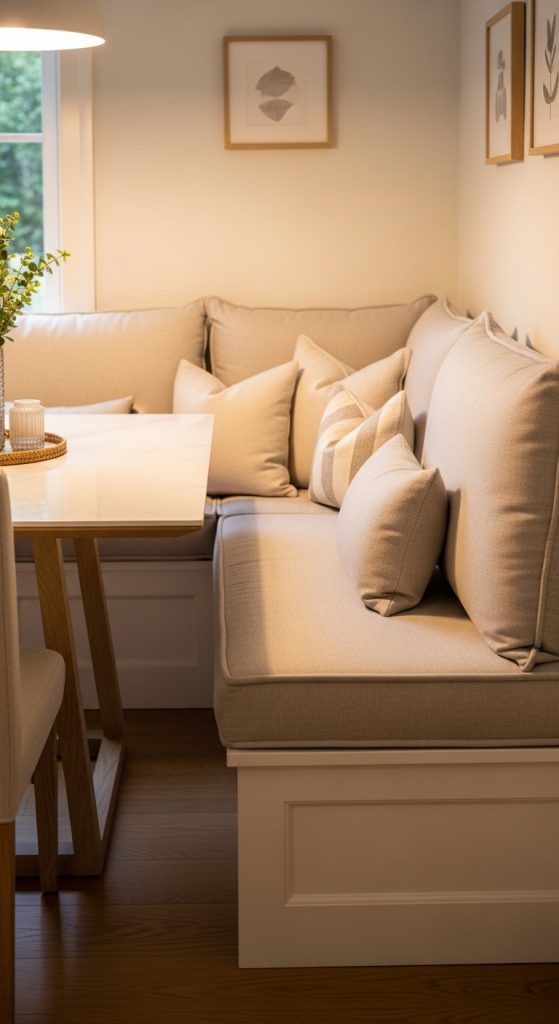
Upholstered corner benches add comfort and softness to breakfast nooks. This design uses padded seating surfaces covered with fabric or leather materials. It enhances the cozy atmosphere and provides a more comfortable dining experience. The structure is typically built using a wooden frame with foam padding on top.
To execute this idea, construct a basic corner bench frame and attach foam padding securely. Cover the surface with fabric using staples or adhesive methods. Ensure tight fitting for a clean finish. Pair the seating with a matching table to complete the setup. This DIY project allows creative customization through fabric selection and color coordination.
Idea 8: Scandinavian Style Light Wood Nook
Setup Method
A Scandinavian style nook focuses on simplicity, light tones, and functional design. It often uses pale wood materials combined with neutral colors to create a calm and airy environment. The seating is minimal yet highly functional, with clean lines and uncluttered structure.
To set up this design, choose light-colored wood for benches and tables. Maintain simple geometry without excessive detailing. Add neutral cushions for subtle comfort. Keep decorations minimal to preserve the Scandinavian aesthetic. This idea aligns with modern design principles and is highly beginner friendly.
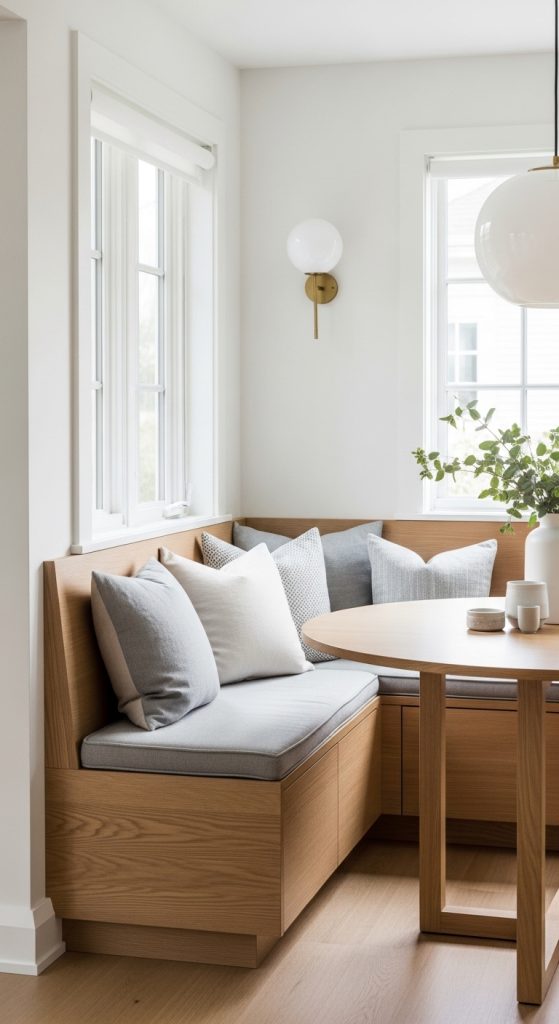
Idea 9: Multi-Functional Dining and Study Corner
How to Create
A multi-functional nook combines dining and study functions in one corner space. This design is ideal for compact homes where space must serve multiple purposes. The seating area includes a table suitable for meals and work activities, creating a flexible environment.
To create this setup, choose a durable table with sufficient surface area. Add comfortable seating that supports long usage. Organize nearby storage for books or dining essentials. Ensure proper lighting for both activities. This DIY project is practical and highly efficient for modern living.
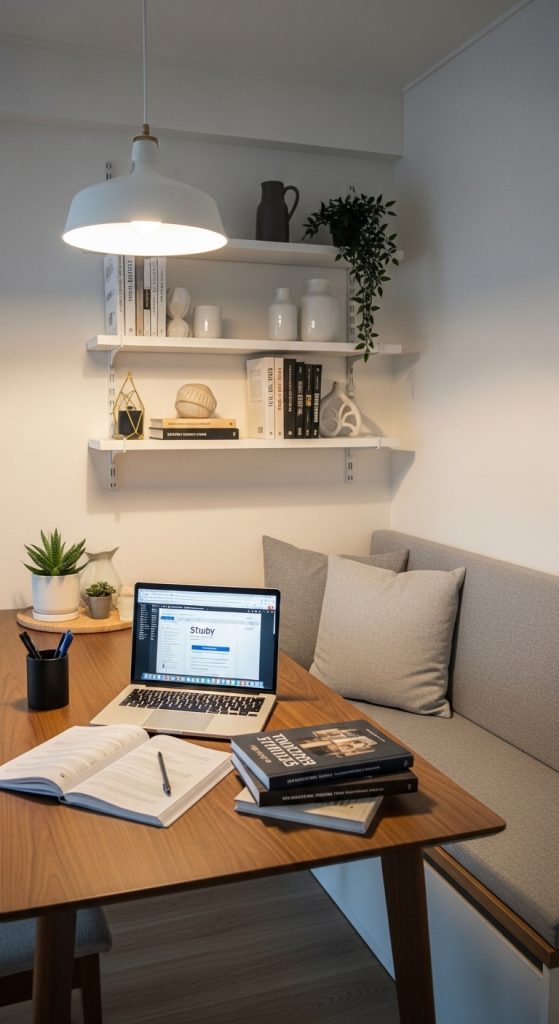
Idea 10: Decorative Greenery Corner Nook
Step-by-Step Guide
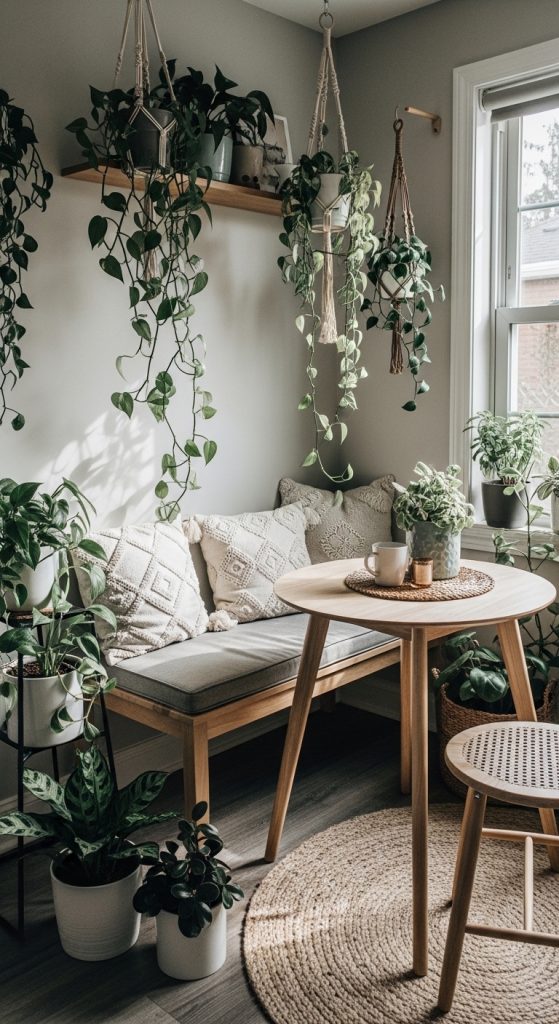
A greenery-focused nook integrates plants into the breakfast seating area. This design enhances freshness and creates a natural atmosphere. Plants can be placed on shelves, around seating, or as central decorative elements.
To build this nook, position seating in a corner with access to natural light. Add plant stands or hanging pots around the area. Choose low-maintenance indoor plants for ease of care. Combine greenery with simple furniture to maintain balance. This idea is highly aesthetic and aligns with modern home decor trends.
Common Beginner Mistakes and How to Avoid Them
A common mistake is inaccurate measurement of corner space, which leads to poor fitting furniture. Another issue is overloading the design with unnecessary decorative elements that disrupt balance. Beginners often choose unsuitable materials that reduce durability. To avoid these problems, careful planning, simple design choices, and proper material selection are essential for successful execution.
Practical Tips for Better Results
Using consistent color palettes improves visual harmony in corner breakfast nooks. Selecting multifunctional furniture increases space efficiency. Keeping proportions balanced ensures comfortable movement. Prioritizing natural lighting enhances the overall atmosphere. These practical improvements help achieve better results in DIY home decor projects.
Styling, Presentation, or Organization Ideas
Styling a breakfast nook involves combining cushions, table decor, and subtle accessories. Maintaining a clean and organized surface improves functionality. Using coordinated textures enhances visual appeal. Minimal decoration is often more effective for modern design aesthetics. Proper arrangement ensures both comfort and style remain balanced.
Budget or Time Planning
Most corner breakfast nook projects can be completed within a short timeframe depending on complexity. Simple designs require minimal materials and basic tools, making them budget friendly. More advanced setups with storage or upholstery require additional planning. Efficient scheduling and material preparation help reduce overall project time.
Creative Expansion and Advanced Inspiration
Advanced variations can include integrated lighting under benches, hidden storage systems, or modular seating that can be rearranged. Combining multiple materials such as wood, metal, and fabric creates unique modern design effects. Expanding the concept allows for more personalized DIY home decor solutions that evolve with changing needs.