
10 Outdoor Rug Layering Ideas
Outdoor rug layering has become one of the most practical Pinterest ideas for transforming simple patios, balconies, and garden seating areas into structured and visually rich outdoor environments. This design approach uses multiple rugs placed in intentional combinations to build depth, texture, and zoning within an exterior space. Instead of relying on permanent flooring changes, layered rugs offer a flexible way to define areas such as seating zones, dining corners, and relaxation spaces. The technique works across different patio sizes and supports both small-space organization and large outdoor layout design.
This article explains 10 outdoor rug layering ideas in a structured and practical way. Each idea focuses on how layering changes spatial perception, improves organization, and enhances visual balance. Readers will learn how to combine textures, colors, and placements to achieve functional outdoor styling. The content is designed for beginners as well as those exploring more advanced home decor approaches. Every concept is broken down into clear execution steps so that outdoor spaces can be improved using simple materials and thoughtful planning without complex construction or permanent modifications.
Why This Idea Is Trending or Useful
Outdoor rug layering is trending in Pinterest ideas because it offers a simple method to upgrade outdoor spaces without structural renovation. Many modern homes and apartments have limited patio space, and layering rugs allows users to create defined zones without adding physical barriers. This approach supports flexible design, making it easy to adjust layouts for different occasions such as gatherings, dining, or relaxation. It also aligns with the growing preference for adaptable home decor solutions that can be changed seasonally or stylistically.
The design relevance of rug layering comes from its ability to add depth and texture to flat outdoor surfaces. A single rug often provides limited visual impact, while layered combinations introduce contrast and dimension. This technique is widely used in modern design because it supports minimalist style while still allowing creative expression. It is also beginner friendly, requiring only basic materials and simple placement methods. As a DIY approach, it enables homeowners to experiment with color combinations, patterns, and spatial organization. These qualities make layered rugs a consistent feature in trending ideas for outdoor styling, home organization, and aesthetic creative projects.
Materials and Preparation
Before starting outdoor rug layering, proper preparation ensures balanced results and long-term usability. The primary materials include at least two outdoor rugs with different sizes, textures, or patterns. One rug typically serves as a base layer, while the second acts as an accent layer. Choosing weather-resistant materials is essential for outdoor durability. Additional decorative elements such as outdoor furniture, cushions, or small tables can support the layered composition and help define the overall layout.
Preparation also involves measuring the patio or balcony space accurately. A measuring tape is used to determine how much surface area each rug will cover. Planning the layout in advance prevents overcrowding and ensures proper spacing between furniture and rugs. Cleaning the surface before placement is also important to maintain stability and prevent uneven positioning. Designers often sketch rough layouts before execution to visualize balance and proportion. This planning stage helps align rug placement with functional zones such as seating or walking areas. Proper preparation ensures that the final layered design remains structured, practical, and visually cohesive.
Idea 1: Centered Base Rug with Offset Accent Layer
How to Create
The centered base rug with offset accent layer is one of the most balanced outdoor rug layering ideas used in patio design. This concept involves placing a large base rug as the foundation of the seating or activity area, then layering a smaller rug slightly off-center to create controlled asymmetry. The design introduces visual movement while maintaining structure, making it suitable for both modern design and minimalist style preferences. The offset placement prevents the layout from appearing static and adds depth without overwhelming the space. This approach is often used in Pinterest ideas focused on clean but expressive outdoor organization.
The base rug defines the primary zone, usually under seating or dining furniture, while the accent rug highlights a specific focal point such as a coffee table or lounge chair. The contrast between size and positioning creates a layered visual hierarchy. Neutral tones are often used for the base layer, while patterned or textured rugs serve as accents. This combination ensures clarity and balance in outdoor decor while still allowing creative variation. The final composition feels intentional and structured, making it suitable for both small and large patio environments.
Execution Process
The execution begins by placing the base rug in the central area of the patio. It must be aligned with the main furniture grouping to establish spatial grounding. Once positioned, the accent rug is placed on top at a slight angle or offset position. The placement should highlight a key furniture piece without covering the entire base rug. This controlled layering ensures both rugs remain visible and contribute to the overall composition.
Furniture is then arranged around the layered rugs to reinforce structure. Chairs or sofas should partially sit on both layers to create unity between elements. Adjustments are made to ensure clean edges and balanced spacing. This method is widely used in DIY home decor projects because it requires minimal materials while producing a strong visual effect. It is especially effective for creating organized outdoor zones with clear design intent.

Idea 2: Textured Contrast Rug Layering
How to Create
Textured contrast rug layering focuses on combining rugs with different surface materials to create tactile and visual depth in outdoor spaces. This approach uses contrast between woven, flat, or patterned rugs to enhance the perception of structure within a patio layout. The design is effective in transforming plain surfaces into dynamic environments with subtle complexity. It works well in modern design setups where simplicity is maintained while still introducing variation through texture. This idea is widely used in Pinterest ideas for creating visually engaging outdoor decor without excessive color use.
The concept relies on pairing rugs that differ in texture rather than color alone. A tightly woven base rug can be combined with a looser patterned or braided rug on top. This combination creates depth while maintaining cohesion. The placement should highlight seating or functional zones without disrupting movement flow. Neutral color schemes are often preferred to allow texture differences to stand out more clearly. This method is suitable for beginner friendly projects because it does not require precise pattern matching, only thoughtful selection of materials.
Step-by-Step Guide
The process begins with selecting two rugs that contrast in texture but complement each other in tone. The base rug is positioned first to define the primary area of use. The second rug is then placed partially over the base, focusing on areas where visual emphasis is needed. Furniture is arranged to support both layers and ensure stability.
Final adjustments include smoothing edges and ensuring visible texture variation. The layered effect should remain balanced and not overly dense. This approach is commonly used in creative outdoor styling because it enhances visual interest while maintaining a structured and organized layout suitable for patio environments.

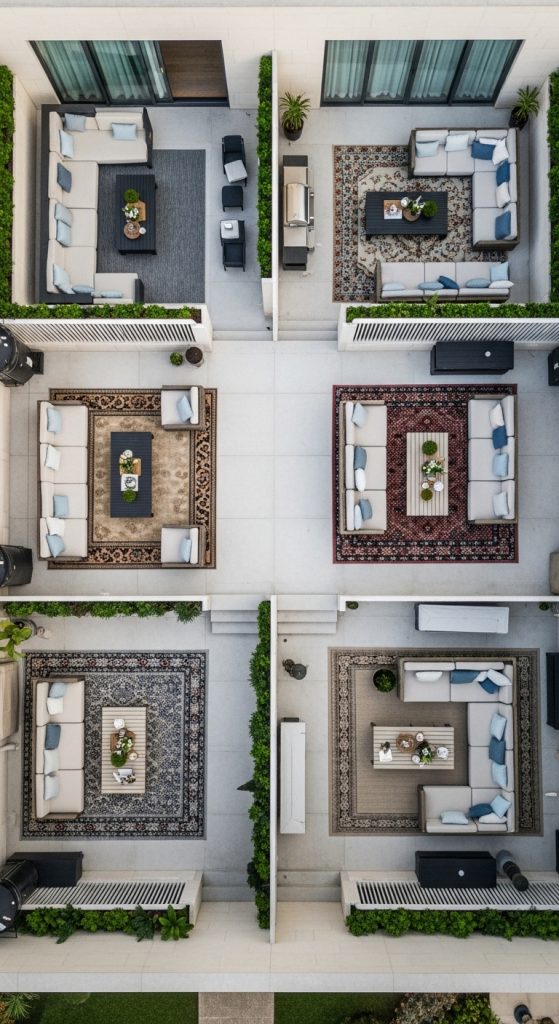
Idea 3: Zoned Patio Separation with Layered Rugs
How to Create
Zoned patio separation with layered rugs focuses on dividing outdoor spaces into functional areas using multiple rug layers. This concept is useful for larger patios where dining, lounging, and walking areas exist within a single open layout. Layering rugs helps visually separate these zones without physical barriers. The design improves organization and ensures each section has a clear identity while maintaining overall cohesion.
Each zone is assigned a base rug that defines its function. A second rug is then layered within the same zone to highlight specific focal points such as seating centers or dining tables. This creates a structured hierarchy within each area. The use of consistent color palettes across zones ensures visual unity while still allowing functional separation. This method is widely featured in Pinterest ideas for outdoor organization and spatial planning.
Execution Process
The process begins by mapping the patio into functional zones based on intended use. Each zone is assigned a base rug placed according to its purpose. Accent rugs are then layered within each zone to enhance structure and focus. Furniture placement follows rug boundaries to maintain clarity.
Final adjustments ensure smooth transitions between zones. Walkways are kept clear to maintain flow. This method is effective for creative projects that require both organization and aesthetic balance in outdoor living spaces.
Idea 4: Neutral Base with Patterned Overlay Styling
How to Create
Neutral base with patterned overlay styling uses a simple rug as a foundation and a patterned rug as a decorative layer. This design creates contrast while maintaining a controlled visual environment. It is commonly used in minimalist style outdoor setups where simplicity and subtle decoration are balanced.
The base rug provides a calm background, while the patterned layer introduces visual interest. Patterns may include geometric, striped, or organic designs. The combination should remain balanced to avoid visual overload. This approach is suitable for budget ideas because it allows reuse of simple base rugs with interchangeable overlays.
Execution Process
The base rug is placed centrally to define the seating or activity zone. The patterned rug is then layered on top, aligned with key furniture elements. Adjustments ensure visibility of both layers without overcrowding.
Furniture is arranged to frame the layered rugs, reinforcing structure. This method is widely used in DIY outdoor decor projects for its flexibility and ease of execution.

Idea 5: Asymmetrical Corner Rug Layering
How to Create
Asymmetrical corner layering places rugs in corner sections of patios to create directional focus. This design draws attention to specific seating or relaxation areas.
Step-by-Step Guide
A base rug is placed in a corner, followed by a smaller rug layered diagonally. Furniture is arranged to support the angled composition. This creates dynamic visual movement.
Idea 6: Overlapping Circular Rug Design
How to Create
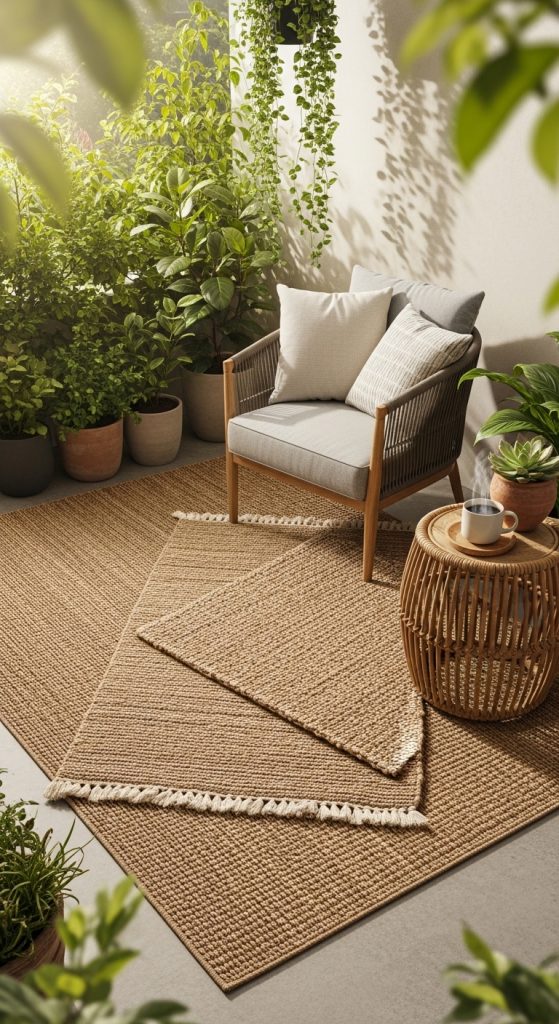
This idea uses circular rugs layered in overlapping positions to soften rectangular patio layouts.
Execution Process
Rugs are placed with partial overlap, creating curved visual flow. Furniture is centered to enhance symmetry.
Idea 7: Multi-Texture Boho Layered Patio
How to Create
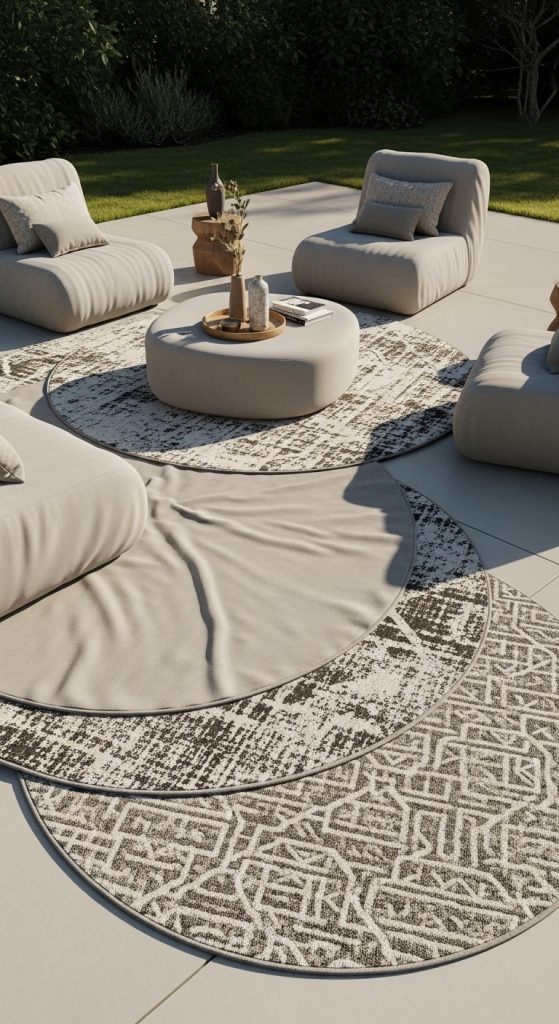
This style combines woven, patterned, and soft-texture rugs for a bohemian aesthetic.
Step-by-Step Guide
Rugs are layered freely with slight offsets. Accessories enhance relaxed visual structure.

Idea 8: Minimal Layered Monochrome Setup
How to Create
Monochrome layering uses similar tones for a unified modern design.
Execution Process
Rugs are layered with subtle tonal differences for depth without contrast overload.
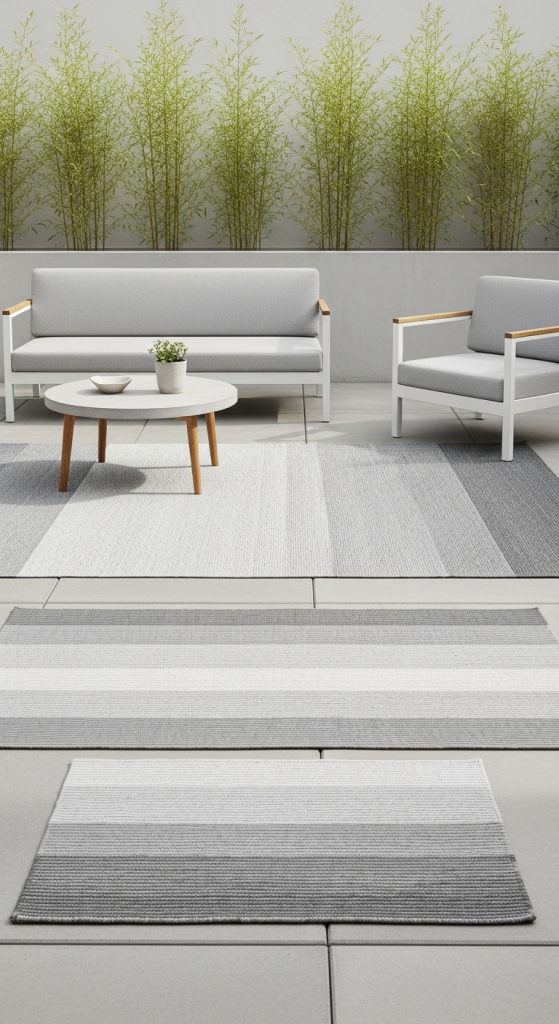
Idea 9: Directional Flow Rug Layering Path
How to Create
Rugs are arranged in layered sequence to guide movement across patio spaces.
Step-by-Step Guide
Each rug overlaps slightly to create directional flow toward seating zones.

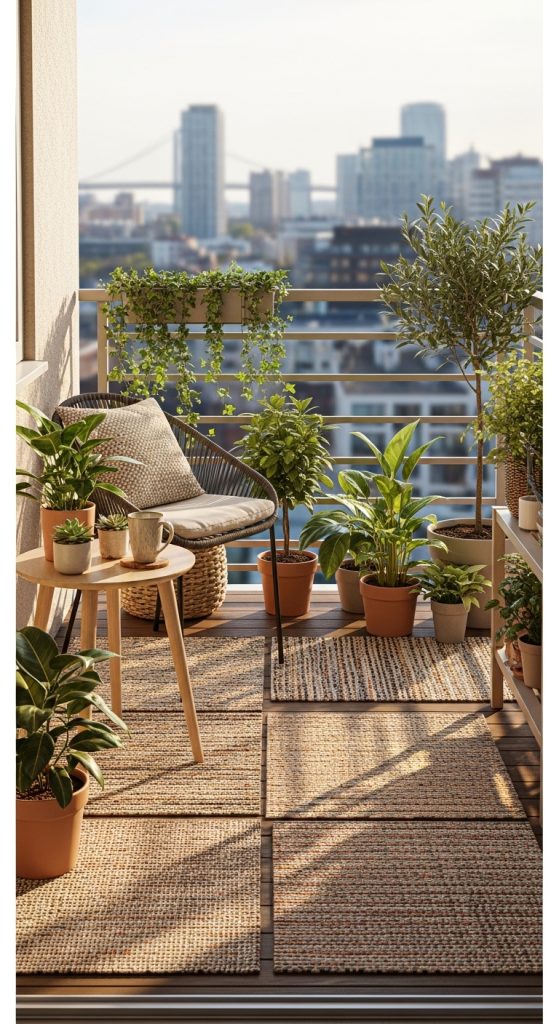
Idea 10: Compact Balcony Layered Rug System
How to Create
Designed for small balconies, this system uses compact rugs for layered efficiency.
Execution Process
Small rugs are layered to define seating and walking areas without crowding.
Common Beginner Mistakes and How to Avoid Them
A frequent mistake is using rugs that are too similar in size, which reduces layering effect. Another issue is overcrowding patterns, leading to visual confusion. Proper contrast in texture or scale improves results. Incorrect placement can also disrupt flow, so careful planning is necessary. Balanced spacing ensures clear and functional design outcomes.
Practical Tips for Better Results
Selecting rugs with complementary tones enhances cohesion. Maintaining clear focal points improves structure. Using weather-resistant materials ensures durability. Proper measurement before placement avoids imbalance. These techniques support effective outdoor rug layering results.
Styling, Presentation, or Organization Ideas
Layered rugs can be styled with coordinated furniture arrangements and defined seating zones. Accessories should support rather than dominate the layout. Presentation improves when rugs align with functional areas. Organized placement enhances overall patio structure and aesthetic clarity.
Budget or Time Planning
Outdoor rug layering is cost-effective and flexible. Most setups require minimal time when planned correctly. Budget-friendly results can be achieved using simple base rugs with reusable accent layers. Efficient planning reduces adjustment time and improves execution.
Creative Expansion and Advanced Inspiration
Advanced layering includes experimenting with multi-directional placements, combining more than two rugs, and integrating lighting elements. Creative expansion allows patios to become highly personalized outdoor environments. These techniques support ongoing design evolution and aesthetic refinement.